The Technion Medal is awarded in recognition of exceptional individuals who have made unstinting efforts to advance humanity; who have worked tirelessly to contribute to the welfare of the Jewish people and the State of Israel; and whose diligent and generous support has proved critical in advancing the Technion, thereby strengthening the industrial, scientific and economic infrastructure of Israel. First established in 1996, the Medal is the Technion’s highest honor representing the utmost level of recognition that the Technion can bestow.
70 Years of Nation Building
“It’s fortunate that Technion existed before the State of Israel. If it had been the other way around who knows what would have happened.” – Shimon Peres
THE NATIONAL IMPERATIVE
In 1912 the Technion cornerstone was laid with the vision to create a university to educate engineers and architects. By 1948, the infrastructure, knowhow and skills were in place to support the birth of the State of Israel.
1948
THE STATE IS BORN
Read more
1953
ISRAEL DEMANDS MORE ENGINEERS
Read more
1955
NATIONAL INFRASTRUCURE WORKS
Read more
1961
HOME GROWN HIGH-TECH
Read more
1968
HOLDING UP THE WALL
Read more
1975
MICROELECTRONICS
Read more
1980
COMPUTER SCIENCE
Read more
1985
THE HIGH-TECH REVOLUTION
Read more
1990
THE BRAIN GAIN
Read more
1992
SEEDING ISRAEL’S START-UP CULTURE
Read more
2000
NANO RESEARCH IS LAUNCHED
Read more
2004
FIRST NOBEL PRIZES IN SCIENCE
Read more
2011
IRON DOME
Read more
2013
THE NOBEL LEGACY CONTINUES
Read more
2017
GLOBAL CONSOLIDATION
Read more
2020
QUANTUM LEAP
Read more
Bringing NY Back to the Future
September 2017 saw the historic inauguration of a global campus on Roosevelt Island in New York City. Over 500 guests were present for the official opening of the innovation hives of the future: Cornell Tech and the Jacobs Technion-Cornell Institute. Guests included Mayor Bill de Blasio, Gov. Andrew Cuomo, former Mayor Michael Bloomberg, Cornell University President Martha Pollack and Technion President Peretz Lavie.
“It’s ambitious — it was almost an audacious dream when we started,” said Gov. Andrew Cuomo, prior to the ribbon-cutting ceremony. “In many ways, this project helps bring New York City back to the future,” said project visionary Michael Bloomberg.
President Peretz Lavie recalled thinking the Israeli institute had a slim chance of winning the bid. “Since we have such a slim chance of winning — be wild,” he recalled telling the Technion team. “Use your imagination, think outside the box.”
Predicting Health
In 1992, Billy Hrvoye left war-torn Sarajevo on the last Jewish Agency flight to Israel. With his life on-hold, the young refugee convinced the dean of the Technion Faculty of Electrical Engineering to let him resume his studies despite the language barrier. “The Technion was my family and my first home,” he says. “I came like a refugee and the Technion helped me dream big.”
While at Technion, Billy befriended fellow student Nafea Bshara, a Christian Arab from the northern town of Tarshiha, who, because his father was a Technion student, was born into a Technion dorm. Impressions of infancy ran deep, as Nafea ended up enrolled within the Technion Excellence Program. “I don’t think I would get the fundamentals and breadth and exposure that I receivedat Technion at an Ivy League school,” he says.
After working at IBM and the Israeli StartUp Galileo, the two Technion alumni decided to start up alone. “We co-founded Annapurna with Ronen Boneh and a group of exceptionally talented leaders,” recalls Billy. The productaccelerates cloud servers – claiming superior performance, security and efficiency. “Many companies weren’t willing to take risks, but Amazon is forward-thinking with a long-term vision,” explains Nafea. “Our cultural DNAs matched. We both wanted to change the world.”
Soon Annapurna had 70 people doing R&D in Yokneam and 19 more around the world in sales and marketing. In early 2015, Amazon bought Annapurna Labs reportedly for over $300 million. After the acquisition, Amazon announced the opening of two new centers in Tel Aviv and Haifa, which will provide work for hundreds of Israelis.
“Our biggest problem is deciding what NOT to do,” says Billy: “On a human level, it’s important that the people with us fulfill their dreams. We believe that if you can dream it, you can do it.”
From Annapurna to Amazon
How two Technion alumni conceived the start-up that would help Amazon move swiftly and smartly into the next generation of digital enterprise.
In 1992, Billy Hrvoye left war-torn Sarajevo on the last Jewish Agency flight to Israel. With his life on-hold, the young refugee convinced the dean of the Technion Faculty of Electrical Engineering to let him resume his studies despite the language barrier. “The Technion was my family and my first home,” he says. “I came like a refugee and the Technion helped me dream big.”
While at Technion, Billy befriended fellow student Nafea Bshara, a Christian Arab from the northern town of Tarshiha, who, because his father was a Technion student, was born into a Technion dorm. Impressions of infancy ran deep, as Nafea ended up enrolled within the Technion Excellence Program. “I don’t think I would get the fundamentals and breadth and exposure that I receivedat Technion at an Ivy League school,” he says.
“Our cultural DNAs matched. We both wanted to change the world.”– Nafea Bshara “Our mantra is that there are limitless opportunities.”– Billy Hrvoye
After working at IBM and the Israeli StartUp Galileo, the two Technion alumni decided to start up alone. “We co-founded Annapurna with Ronen Boneh and a group of exceptionally talented leaders,” recalls Billy. The productaccelerates cloud servers – claiming superior performance, security and efficiency. “Many companies weren’t willing to take risks, but Amazon is forward-thinking with a long-term vision,” explains Nafea. “Our cultural DNAs matched. We both wanted to change the world.”
Soon Annapurna had 70 people doing R&D in Yokneam and 19 more around the world in sales and marketing. In early 2015, Amazon bought Annapurna Labs reportedly for over $300 million. After the acquisition, Amazon announced the opening of two new centers in Tel Aviv and Haifa, which will provide work for hundreds of Israelis.
“Our biggest problem is deciding what NOT to do,” says Billy: “On a human level, it’s important that the people with us fulfill their dreams. We believe that if you can dream it, you can do it.”
Education Without Borders
The Lalibela group of the Technion Chapter of Engineers Without Borders took part in a mud construction workshop in the Ramon Eco Center in Mitzpe Ramon, during which they built and tested different models of rocket stoves. The Lalibela group is working on developing a new type of a sustainable stove for the Meskele Kristos community in Ethiopia, which will significantly reduce the pollution emitted by the traditional stoves and thereby improve the health of the community members.
Elucidating Experience
“Vision is perhaps our greatest strength… it has kept us alive to the power and continuity of thought through the centuries, it makes us peer into the future and lends shape to the unknown.” – Li Ka-shing
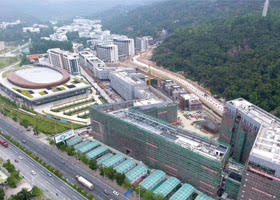
The Guangdong Technion-Israel Institute of Technology (GTIIT) was officiallyinaugurated in December 2017 in Shantou, China. GTIIT is an historic partnership between the Li Ka Shing Foundation, the Guangdong Provincial Government, the Shantou Municipal Government and the Technion – Israel Institute of Technology. It will train an elite cadre of scientists and engineers, and will also promote cooperation between Shantou University and Technion.
(L-R): Mayor of Shantou Zheng Jiange, Technion President Peretz Lavie, Director of the Li Ka Shing Foundation Richard Li, GTIIT Vice Chancellor Nobel Laureate Aaron Ciechanover, Consul General of Israel in Guangzhou Nadav Cohen, Vice-Governor of Guangdong Province Huang Ningsheng, Former Governor of Guangdong Province Zhu Xiaodan, Honorary Chairman of the Shantou University Council Li Ka-Shing, Secretary of the CPC Shantou Chen Liangxian, GTIIT Chancellor Li Jiange, Chair of Planning Committee Yaffa Zilbershats, STU President Jiang Hong
The new campus covers 100,000 square meters and includes 13 buildings, 29 classrooms, 14 teaching laboratories and 55 research laboratories. Six buildings serve as dormitories for students and faculty. GTIIT is expected to train approximately 3,000 students in its first decade, including 300 postgraduates. In the current academic year, there are already 216 students studying at GTIIT.
“China offers Technion a broad platform to realize its academic excellence. We in turn must learn from Technion and Israel as to what innovative thinking is.” said GTIIT Chancellor Li Jiange at the festive ceremony.
A Jewish State is born
70 years ago, the State of Israel was born, but this wasn’t the end of Technion’s work, rather the start of a whole new challenge. Never before did the fate of a nation rest so unequivocally on the education of its young people. Israel needed infrastructure, medicine, water and energy. It needed innovators, decision-makers and entrepreneurs. For all of this, the people looked to Technion.
“An Institute of Technology of a high level is one of the most vital needs of the State of Israel at this time,” said Prime Minister David Ben Gurion. “We are a small, poor people; our country is largely desolate; we are surrounded by hostile nations who threaten our existence. We are compelled to create, at an unprecedented rate, sources of livelihood for masses of our brethren who are returning to their homeland… For these great and difficult tasks we must call on the aid of the latest achievements of both pure and applied science and the most advanced improvements of technology.”
Technion was fast to meet the urgent needs of the fledgling nation, turning out top-quality engineers at vast speed. Yet Israel’s Institute of Technology was at the same time firmly rooted in the future. Reaching for the skies in 1949, Technion recruited Prof. Sydney Goldstein from Manchester University to chair Israel’s first department of Aeronautical Engineering. Within a decade, Technion had vastly expanded, leaving the original building in midtown Hadar to serve the young State of Israel and the world from the upper slopes of Mount Carmel.
At Technion, the fulfilment of a need is the starting point. The core of Technion power comes from vision – the vision to create a better future. This is a place where your imagination gets to work; where you are part of the global dynamo of reinvention – where everything is possible.
How will the new-born state protect and sustain itself?
“I have seen with great satisfaction how the Technion has been indispensable to Israel’s agriculture, industrial development, economic growth and national security. Its engineers, scientists and architects have literally built the State of Israel.”
Albert Einstein
Guangdong Technion
Degrees of Technion
A year after the cornerstone ceremony of the Guangdong Technion Israel Institute of Technology, the fledgling multinational institute in China received official approval from the Chinese Ministry of Education. Cooperation with Technion is consistent with the goal of the Chinese Government to establish world-class research universities and to promote innovation-based development, confirmed the ministry. The new campus opens in the coming academic year..
TECHNION TAKES THE BRONZE AT THE CHEMISTRY OLYMPICS
Summer 2016 and Technion City opened its eyes to the stars, hosting the International SpaceUniversity (ISU), the first ever in the Middle East.
Over 100 participants from 24 countries paraded their national flags, many wearing national costumes to initiate an academic festival of lectures, distinguished guests and space innovation.
Technion hosted the 29th annual Space Studies Program (SSP16) for an intense nine-week graduate level program which offers the participants a unique and comprehensive professional development experience covering all aspects of space programs and enterprises.
Guests included US astronauts Buzz Aldrin (second man on the moon), Jeff Hoffman, and Jessica Meir; Rona Ramon, (widow of Israeli astronaut Ilan Ramon); Canadian astronomer David Levy, who discovered Comet Shoemaker-Levy 9; and aerospace engineer and science-fiction writer Eric Choi.
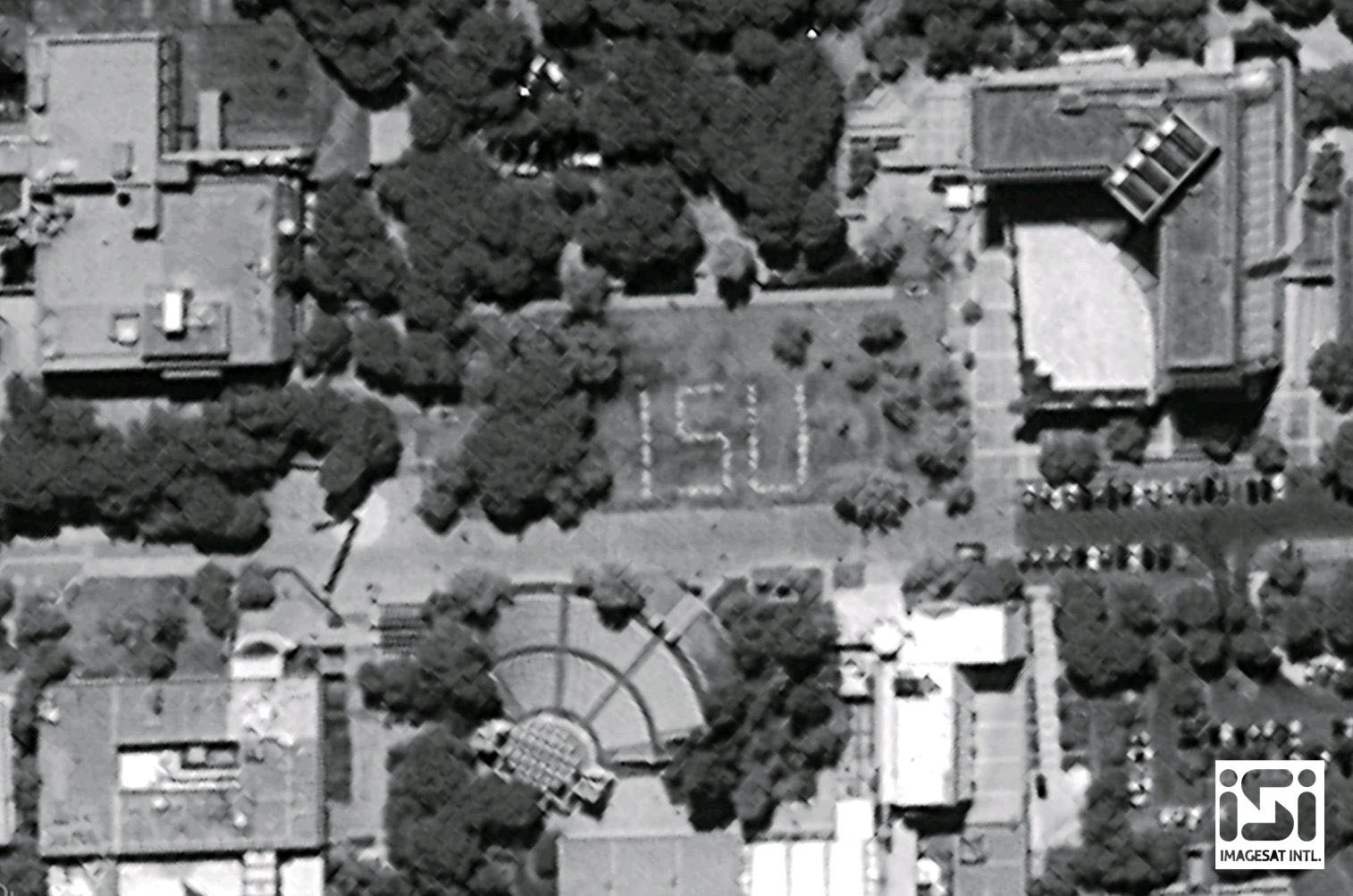
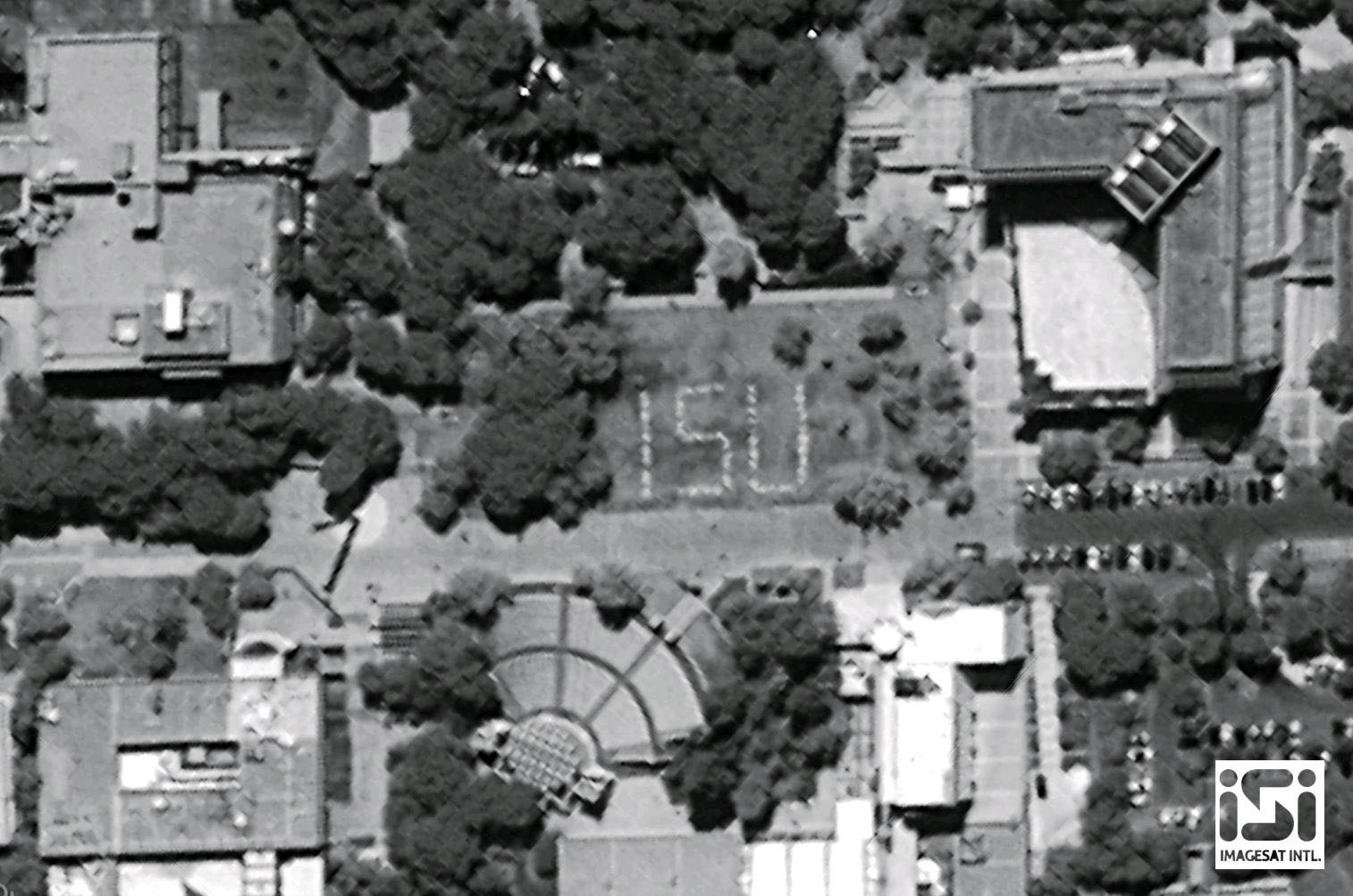
Events included a robotics competition, a rocket launch at Kibbutz Gal’ed, and the first SpaceUp Unconference in the Middle East. The energy charged summer even included a ‘Selfie’ of SSP participants at the heart of Technion campus, taken by satellite.
Earthlings formed the letters ISU on the great lawn at the heart of the campus for a selfie from space!
“Today, I consider myself a global spokesman for space.”
– Dr Buzz Aldrin, at Technion SSP
The Internet of Value
Why the world’s new currencies will be encrypted
The digital revolution has left no stone unturned, but perhaps one of the most unexpected revolutions currently in motion is impacting the financial sector with the arrival of the bitcoin and other decentralized electronic currencies.
In September 2017, the The Hiroshi Fujiwara Cyber Security Research Center at Technion hosted the conference: “Decentralized Cryptographic Currencies and Blockchains.” The conference featured some of the elusive movers and shakers in the field of Crypto currencies – including Vitalik Buterin, founder of Ethereum, an open-source platform based on blockchains. Ethereum skyrocketed in 2017, reaching an all-time high.
“The first generation of the digital revolution brought us the Internet of information. The second generation — powered by blockchain technology — is bringing us the Internet of value: a new platform to reshape the world of business and transform the old order of human affairs for the better.”– Don Tapscott, Blockchain expert
The conference also addressed blockchains, the technological concept behind cryptocurrencies such as Bitcoin, Ethereum, and Zcash; the regulation of virtual currencies; and more. It was attended by students, researchers, and industry professionals.
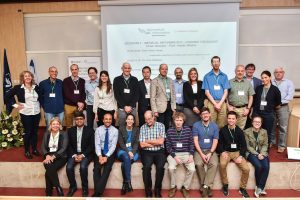
Prof. Eli Ben-Sasson (L) with conference participants
The conference was organized by Prof. Eli Biham, head of the Fujiwara Cyber Security Research Center, and Prof. Eli Ben-Sasson, both from the Faculty of Computer Science.
The Hiroshi Fujiwara Cyber Security Research Center at Technion focuses on cyber security research such as software and hardware protection, operating systems and cloud information protection as well as communication to and from the cloud, protection of IoT (Internet of Things) systems, verification of software and hardware, computer vision, security of autonomous systems, machine learning for security, cryptology andcryptanalysis, security and privacy of medical and aeronautical systems.
MOOC It Up
Often equated to the revolution sparked by Gutenberg’s printed word, the MOOC is providing worldwide access to the most advanced ideas fueling human progress.
“This is part of going global. All the best universities are there,” explains Ronit Lis-Hacohen, Managing Director of the Technion International School. A MOOC (Massive Open Online Course) is not a repetition of the traditional class given in the lecture hall, but a whole new form of education, she says. MOOCs have a dual impact – not only online, but also on traditional teaching methods. Increasingly, the online course brings focus and precision to course conceptualization, while students have the option of studying in and around their term-time activities.
“Educate the masses, elevate their standard of intelligence, and you will certainly have a successful nation.” – Alexander Graham Bell
There is even the possibility, demonstrated by Prof. Danny Levine, to flip the classroom: giving the MOOC as homework, and leaving the space of direct interaction with students in person for problem-solving, discussion and in-depth exploration of the subject matter. “It works perfectly and the average grade rises,” says Lis-Hachohen.
One of the exciting MOOCs that was recently launched by Technion is given by Prof. Michael Elad on Sparse Representation Theory (Sparseland), the first session presents basic theoretical ideas of sparse representations, and the second connects this model to applications in image processing.
Prof. Elad of the Computer Science Faculty, has made sharp inroads into the emerging field of Deep Learning together with his dynamic graduate team. Last year they introduced unprecedented theoretical foundations to the field of Deep Learning, explaining many of the important aspects of multi-layered neural networks.
Digital 1st
“The one who cares for the future, plants wheat. The one who cares for the years to come, plants trees. The one who cares for future generations, educates people.” – Janusz Korczak
From medicine to banking, through to agriculture and communications, the digital revolution is transforming all fields of life. Just as academic institutions worldwide wake up to the fact that the education of students with the latest digital skills is a direct function of success, Technion has been named by a Times Higher Education survey as the top institute worldwide in inculcating digital skil
“This is a badge of honor for Technion,” says Technion President Prof. Peretz Lavie. “In recent years, Technion has placed considerable emphasis on training its students to meet the changing needs of the digital revolution. Advanced learning technologies are being implemented, including the introduction of MOOCs –MOOCs – Massive Open Online Courses – in various languages – and the development of the flipped classroom approach, which emphasizes self-study using state-of-the-art technology.”
In the recent Times Higher Education survey, representatives of global leading companies were questioned on required skills to succeed in today’s labor market. The survey compiled a list of top academic institutions for providing the best digital skills, ranking Technion first.
CATS COUNTER HIV
Feline AIDS of FIV gives clues in how to counter human AIDS. Prof. Akram Alian and Dr. Meytal Galilee from the Faculty of Biology are using FIV to uncover the mechanism of viral resistance to anti-reverse transcriptase drugs. Their findings, published in PLOS Pathogens, show that the FIV protein forms a closed pocket that blocks the drugs from effective binding.
Jacobs Technion-Cornell
Technion and Cornell University honored the 2017 graduates of the Joan & Irwin Jacobs Technion-Cornell Institute at Cornell Tech – including the first-ever graduating class of Health Tech students and the second graduating class of Connective Media students. This will be the last class graduating from Cornell Tech’s temporary home in the Google building in Chelsea as the new Cornell Tech campus home of the Jacobs Technion-Cornell Institute opens on Roosevelt Island in September.
Bringing NY Back to the Future
September 2017 saw the historic inauguration of a global campus on Roosevelt Island in New York City. Over 500 guests were present for the official opening of the innovation hives of the future: Cornell Tech and the Jacobs Technion-Cornell Institute. Guests included Mayor Bill de Blasio, Gov. Andrew Cuomo, former Mayor Michael Bloomberg, Cornell University President Martha Pollack and Technion President Peretz Lavie.
“It’s ambitious — it was almost an audacious dream when we started,” said Gov. Andrew Cuomo, prior to the ribbon-cutting ceremony. “In many ways, this project helps bring New York City back to the future,” said project visionary Michael Bloomberg.
President Peretz Lavie recalled thinking the Israeli institute had a slim chance of winning the bid. “Since we have such a slim chance of winning — be wild,” he recalled telling the Technion team. “Use your imagination, think outside the box.”
The Power Behind Power
Innovation aside, the whole entity of civilization depends on energy. Where energy supplies deplete, nations implode, wars explode and suffering corrodes. With a finite supply of fossil fuels and an exponential increase in demand for energy, the Grand Technion Energy Program (GTEP) is presently completing a decade of intense multidisciplinary activity. In these ten years, GTEP has grown from proof of concept to a veritable virtual and physical global hive of energy innovation. Spanning faculties, universities and continents, GTEP’s network of scientists and facilities also has deep inroads into industry, pioneering, for example, the cultivation of expertise to harvest Israel’s newly found natural gas reserves.
Prof. Maytal Caspary Toroker: just one of the GTEP energy pioneers. Her research group deciphers the success of doping iron as the best catalyst known today for splitting water. Water splitting is a process in which water is broken down into hydrogen and oxygen.
The GTEP Graduate Studies Program attracts highly motivated graduates in science and engineering who are also required to carry out a research project. The program is designed to produce leaders in all energy-related fields.
GTEP is active in four dimensions: Alternative Fuels, Energy Storage and Conversion, Renewable Energy Sources, and Energy Conservation.
Natural Genius
How mimetics at the nano scale are improving man made materials
We’re all familiar with the Biblical saying: “There’s nothing new under the sun.” The study of the ancient mechanisms of the brittle starfish led Technion scientists to the innovative secrets which would allow them to follow suit – creating ultra-tough ceramics.
An international research team led by Prof. Boaz Pokroy, Dr. Iryna Polishchuk, Dr. Alex Katsman Stas Kozachevich, and Yael Etinger-Geller at the Faculty of Materials Science and Engineering uncovered the unique protective mechanism of highly resistant lenses found in the Ophiocoma wendtii, a coral reef-dwelling brittle starfish. On the arms of this creature are hundreds of focal lenses that hold clues to making tough ceramics. Made of chalk, the lenses are powerful and accurate, and the deciphering of their crystalline and nanoscale structure has occupied lead researcher Prof. Boaz Pokroy and his team for over three years.
“Ophiocoma wendtii lenses are created in the open sea, not in a laboratory, and in effect we have discovered a strategy for making brittle material much more tough and durable under natural conditions,” said Pokroy. “It is ‘crystal engineering’ and tempering without heating and quenching – a process that could be very useful in materials science and engineering. Just as nature exhibits creativity in improving an organism’s abilities in various contexts such as strength, sensing, and self-defense, we see very high efficiency by the brittle star’s use of existing raw materials under natural conditions to create hardy and precise transparent lenses,” said Prof. Pokroy.
Scientists and engineers can now apply this biostrategy in toughening and strengthening synthetic ceramic materials utilized in various applications that span from optical lenses to automotive turbochargers and even biomaterial implants. The research was published in Science in December 2017.
Out of Chaos
At the purest frontiers of science and operating on a nanometric scale, a research team led by Prof. Erez Hasman at the Faculty of Mechanical Engineering has created a photonic “Big Bang” in laboratory conditions.
The multidisciplinary team demonstrated the transition from an orderly physical system to a disorderly system in optics on a nano-scale. The nanooptics Big Bang occurs when there is increased disorder and the system reaches a critical point of disorder, meaning dispersal of the opposite spinning photons in every direction. “Our research deals with the development of nanometer scale optical devices and with understanding the interaction between light and tiny structures,” explains Prof. Hasman, head of the nano-optics lab.
The photonic “Big Bang” used nanometric metasurfaces based on tiny silicone antennas (nano-antennas). “Using nano-antennas that we produced in the lab using silicone technology, we developed a method to control disorder in the system – increasing the entropy,” elaborates Prof. Hasman. “Light is composed of photons, massless particles, travelling in a speed of light. Each photon behaves like a spinning top that spins either clockwise or counter-clockwise.”
A “photonic spin Hall effect” occurs when an orderly state is transformed into a state of minor disorder, meaning that the angle of the nano-antennas is slightly altered. This effect is a spatial separation between photons spinning in opposite directions; photons with positive spins move in a certain direction and others with negative spins move in the opposite direction.
The research, published in Science, provides inspiration for understanding disorder in solid states, and will impact the field of spintronics. Furthermore, it opens opportunities for designing artificial materials while controlling their level of disorder.
Prof. Kinneret Keren, Faculty of Physics
Predicting Health
For two days in December, researchers and students converged on Technion to hear from the world’s foremost experts on one of the most dynamic and groundbreaking fields today: using deep learning and big data to improve healthcare.
Technion recently hosted the first ever “Biomedical Informatics – Big Data Science” Conference, drawing a large audience eager to hear about the latest developments in this fascinating field. Applying deep learning to medical data makes it possible to generate new hypotheses and to make discoveries that would not have been possible in the past. The conference was brilliantly organized by Prof. Roy Kishony, world authority on antibiotic resistance and Head of the Technion Lokey Center for Life Sciences and Engineering and Dr. Kira Radinsky, visiting Technion professor and director of data science of eBay. Their unique synergy resulted in a precise mix of speakers who covered a wide range of topics – from practical applications of data science in medical care to ethical precision medicine and next generation healthcare. In the course of two days, 24 eminent speakers from around the world shared their latest research findings with the international audience. The conference was sponsored by Yad Hanadiv.
Conference Lecturers
“We’re living in a fascinating era for scientific research, an era where extensive data is used to improve diagnoses and treatments” – President Prof. Peretz Lavie
Prof. Shai Shen-Orr, of the Rappaport Faculty of Medicine and the conference organizing team, addressed the ongoing efforts to build a cell-centered view of genomic data that can be integrated with primary immunology literature.
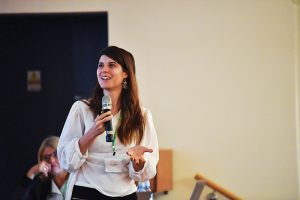
Dr. Kira Radinsky
Experts from around the world included Prof. Nigam Shah from Stanford University, who described the initiative he leads, which takes data from electronic health records and uses machine learning to help doctors answer clinical questions. Dr. Hannah Bayer, a neuroscientist from New York University, spoke about the HUMAN Project, which studies 10,000 New York City residents over a period of 20 years, tracking everything from financial and social data to environmental and health factors.
“We must learn from Technion and Israel as to what innovative thinking is”
BBiological pacemakers derived from stem cells could the cardiac revolution that makes electronic devices surgically inserted into the body a thing of the past.
When the heart needs support keeping rhythm, the life-saving solution today is the surgical implantation of an electrical pacemaker. While conventional pacemakers have saved many lives, they have always carried surgical risks and come with no hormonal sensitivity and a predetermined battery life. With children’s hearts that are still growing, the pacemaker implant becomes still more limited in its ability to support, as the heart rapidly outgrows it. What could be more natural than to turn to the wisdom of the body itself, and its own biological mechanism for maintaining the heart rhythm?”
The sinotrial (SA) node is the natural pacemaker of the heart, and is comprised of a group of dedicated heart cells – SA node pacemaker cells – responsible for initiation of the electrical signal leading to the heart’s rhythmic contraction.
The team from the Technion, Rambam Health Care Campus, and the University Health Network’s McEwen Centre for Regenerative Medicine in Toronto, employed developmental biology to develop a differentiation protocol for the creation of pacemaker cells from human embryonic stem cells.
“The pacemaker generated from embryonic stem cells exhibits the molecular, electrical and functional properties characteristic of human pacemaker cells and is able to pace the heart in animal models of abnormally slow heart rate,” said Prof. Gepstein. “It is an effective and promising alternative to natural pacemaker cells in the event of their dysfunction. This development is significant both in terms of research – because it will enable scientists to study the heart in new ways, and in practical terms – since we are presenting an ‘assembly line’ here for an unlimited reservoir of pacemaker cells to treat patients with heart rhythm problems.
Together with our Canadian partners, we present a method for producing a population of pure pacemaker cells, and provide proof that they work well as a substitute for natural pacemaker cells that have been damaged.”
Prof. Lior Gepstein holds the Sohnis Chair in Tissue Engineering and Regenerative Medicine.
The Iron Lady
Innovation begins with the blank page, at the space where knowledge ends and the unknown begins. It is found in the open mind of young scientists with fresh eyes that look at an old, unsolved problem in a new way.
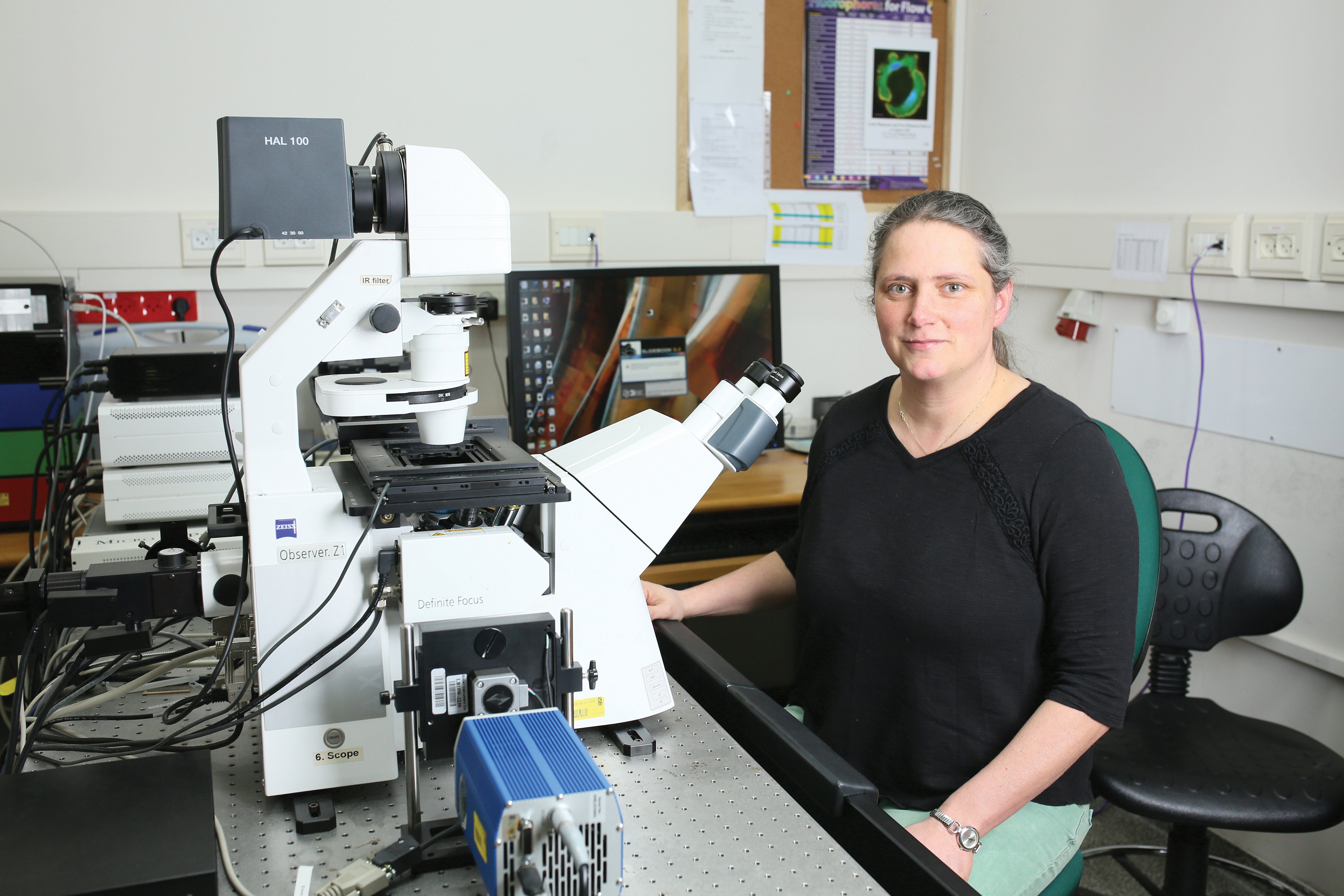
So it was this year with Dr. Marianna Truman-Rosentsvit and Prof. Esther Meyron-Holtz who took the well-known medical problems around iron distribution in the body, and looked at them in a new way. Their discovery into the cellular mechanism of ferritin opens new possibilities for treatments for a range of diseases, including cancer and neurological disorders.
Esther Meyron Holtz, Metabolic revelations
It is well known that we need iron in our body to stay healthy, but less known that too much iron can also cause trouble. Revealing the intelligence behind the distribution of iron, the scientists published a benchmark study in the January 2018 issue of Blood, that for the first time reveals the mechanism for cellular transport and secretion of ferritin, a protein considered central to iron storage in the body. The findings move ferritin to the center stage of systemic iron metabolism, as a protein that not only stores, but also transports iron in a controlled manner, giving it all the attributes of an iron regulator.
“Our discovery opens the door to a more accurate and comprehensive understanding of the characteristics of ferritin and the molecular processes it undergoes,” says Meyron-Holtz. “Such insights are bound to contribute to the development of therapies for numerous neurodegenerative diseases, which are characterized by abnormal iron distribution in the brain.”
From Jaffa to Java
Or, how a developing country became a developed country in half a century, and positioned itself as a world leader in new technologies in just 70 years
The Jaffa orange, perhaps best known as Israel’s first export to the Western world.
Israel: the garden of innovation
In the beginning there was a need: a need to take a barren, historic homeland and make it bloom; a need to rebuild the Jewish homeland and create a better future for its people. For over a century, Technion has provided the spirit of innovation that responds to the need: anticipating the problems of tomorrow with pioneering solutions born out of an infinite source of potential.
Often cited as father of the Start-up Nation, Technion Alumnus and serial innovator Yossi Vardi was first to describe Israel’s meteoric ascent into the community of prosperous nations, coining the term: from Jaffa to Java.
“People here are daring, willing to try, to sacrifice their best years in order to build something meaningful,” he said in honor of Technion’s cornerstone centennial. “If you look at the history, Israel was always a startup nation. A bunch of people came to this part of the world 120 years ago when nothing was here: Israel was a start-up; the kibbutz movement was a start-up; and Technion was a start-up. If you look into the virtues of Israelis you see that our main advantage is to come with an idea from an empty chaos, to create proof of concept and to build around the beginnings. If there had been no Technion, I think we wouldn’t have the kind of technological infrastructure or high-tech industry of today. Everything started in the Technion.”
A Jewish State is born
“Upon the education of the people, the fate of this country depends”– Benjamin Disraeli
70 years ago, the State of Israel was born, but this wasn’t the end of Technion’s work, rather the start of a whole new challenge. Never before did the fate of a nation rest so unequivocally on the education of its young people. Israel needed infrastructure, medicine, water and energy. It needed innovators, decision-makers and entrepreneurs. For all of this, the people looked to Technion.
“An Institute of Technology of a high level is one of the most vital needs of the State of Israel at this time,” said Prime Minister David Ben Gurion. “We are a small, poor people; our country is largely desolate; we are surrounded by hostile nations who threaten our existence. We are compelled to create, at an unprecedented rate, sources of livelihood for masses of our brethren who are returning to their homeland… For these great and difficult tasks we must call on the aid of the latest achievements of both pure and applied science and the most advanced improvements of technology.”
Technion was fast to meet the urgent needs of the fledgling nation, turning out top-quality engineers at vast speed. Yet Israel’s Institute of Technology was at the same time firmly rooted in the future. Reaching for the skies in 1949, Technion recruited Prof. Sydney Goldstein from Manchester University to chair Israel’s first department of Aeronautical Engineering. Within a decade, Technion had vastly expanded, leaving the original building in midtown Hadar to serve the young State of Israel and the world from the upper slopes of Mount Carmel.
At Technion, the fulfilment of a need is the starting point. The core of Technion power comes from vision – the vision to create a better future. This is a place where your imagination gets to work; where you are part of the global dynamo of reinvention – where everything is possible.
Israel: the paradox
How will the new-born state protect and sustain itself?
“I have seen with great satisfaction how the Technion has been indispensable to Israel’s agriculture, industrial development, economic growth and national security. Its engineers, scientists and architects have literally built the State of Israel.”– Albert Einstein
IMPROVED SWIMMING FOR NANO-SCALE ROBOTS
Summer 2016 and Technion City opened its eyes to the stars, hosting the International SpaceUniversity (ISU), the first ever in the Middle East.
Over 100 participants from 24 countries paraded their national flags, many wearing national costumes to initiate an academic festival of lectures, distinguished guests and space innovation.
Technion hosted the 29th annual Space Studies Program (SSP16) for an intense nine-week graduate level program which offers the participants a unique and comprehensive professional development experience covering all aspects of space programs and enterprises.
Guests included US astronauts Buzz Aldrin (second man on the moon), Jeff Hoffman, and Jessica Meir; Rona Ramon, (widow of Israeli astronaut Ilan Ramon); Canadian astronomer David Levy, who discovered Comet Shoemaker-Levy 9; and aerospace engineer and science-fiction writer Eric Choi.
Events included a robotics competition, a rocket launch at Kibbutz Gal’ed, and the first SpaceUp Unconference in the Middle East. The energy charged summer even included a ‘Selfie’ of SSP participants at the heart of Technion campus, taken by satellite.
Earthlings formed the letters ISU on the great lawn at the heart of the campus for a selfie from space!
“Today, I consider myself a global spokesman for space.”
– Dr Buzz Aldrin, at Technion SSP
The Future of Semiconductor Lasing
“What we did is going against the odds, going against common knowledge,” says Distinguished Prof. Mordechai (Moti) Segev of the Faculty of Physics. Prof. Segev was referring to the most recent papers, two groundbreaking back-to-back works on Photonic Topological Insulator Lasers publishedin the prestigious journal Science. This work, says the trailblazing professor, is: “possibly the most important thing I ever did.” This is no small statement by the award-winning Robert J. Shillman Distinguished Professor of Physics.
Topological insulators are one of the most innovative and promising areas of physics in recent years, providing new insight into the basic understanding of protected transport. These are special materials that are insulators in their interior but conduct a “super-current” on their surface: the current on their surface is not affected by defects, sharp corners or disorder; it continues unidirectionally without being scattered.
The researchers found a way to use the properties of photonic topological insulators to build a new type of laser which shows a unique fundamental behavior and greatly improves the robustness and the performance of laser arrays, opening the door for a vast number of future applications.
(L-R): Dr. Miguel A. Bandres, Distinguished Prof. Mordechai Segev and Dr. Gal Harari
“Our research opens the door to many fundamental questions in science but also for exciting applications,” says graduate student Gal Harari. “One of these applications is a long standing problem in laser science and it is how to take many single emitters and coherently combine them together.”
“This new laser system went against all common knowledge about topological insulators” said Segev. “In a nutshell, the unique robustness properties of topological insulators were believed to fail when the system contains gain, as all lasers must have. But we have shown that this special robustness survives in laser systems that have a special (“topological”) design, and is able to make the lasers much more efficient, more coherent, and at the same time immune to all kinds of fabrication imperfections, defects and alike. This seems to be an exciting avenue to make arrays of miniature lasers work together as one: a single highly coherent high power laser.”
Topological Insulator Lasers
In their research, the scientists built a special array of micro ring resonators whose lasing mode exhibits topologically-protected transport – light propagates in one direction along the edges of the laser array, immune to defects and disorder and unaffected by the shape of the edges. This in turn, as they experimentally demonstrated, leads to highly efficient single-mode lasing that lasts high above the laser threshold.
The studies were conducted by Dist. Prof. Moti Segev and his team: Dr. Miguel A. Bandres and Dr. Gal Harari; in collaboration with Profs. Demetrios N. Christodoulides and Mercedeh Khajavikhan and their students Steffen Wittek, Midya Parto and Jinhan Ren at CREOL, College of Optics and Photonics, University of Central Florida, together with scientists from the US and Singapore.
The researchers demonstrated that not only are topological insulator lasers theoretically possible and experimentally feasible but that integrating these properties creates more highly efficient lasers. As such, the results of the study pave the way towards a novel class of active topological photonic devices that may be integrated with sensors, antennas and other photonic devices.
The Quantum Advantage
T he Helen Diller Center is the first of its kind in Israel and is uniquely poised to advance basic sciences while using the principles of quantum mechanics to impact various engineering fields, and to develop applications for a range of industries. Research will focus on quantum computing and information processing; quantum communications; quantum sensing and detection; quantum simulations; simulators and quantum materials. The Center will also be a quantum hub for interdisciplinary collaboration.
The late Helen Diller
“The Technion is one of the preeminent institutions for technology in the world, and my parents thought this was an important investment for the future of Israel and humanity,” said Helen Diller’s daughter, Jackie Safier, President of the Helen Diller Family Foundation. “The new Helen Diller Center for Quantum Science, Matter and Engineering will help Israel secure its place in the next revolution in science and engineering.”
“Over the years, Technion has gained renowned experience in identifying the needs of industries and opportunities for developing the Israeli economy,” said Technion President, Prof. Peretz Lavie. “In the past, this experience has been demonstrated in many fields, including space and aeronautics, microelectronics, electro-optics, and nanotechnology. This ability has allowed Technion to lead historic shifts in Israeli society and play a vital role in building Israel as the ‘Start-up Nation’ – a globally recognized technological powerhouse.”
“The Technion is at the forefront of research in many areas involving quantum mechanics,” said Distinguished Prof. Mordechai (Moti) Segev. “Artificial atoms ‘quantum dots’ were first demonstrated by Prof. David Gershoni and students. Gadi Eisenstein and his team developed tiny, inexpensive atomic clocks that found their way into industry. This is where innovative theoretical concepts were developed by Profs. Netanel Lindner, Daniel Podolsky, Assa Auerbach and their students in the area of quantum materials, with huge worldwide impact. These are only a few examples, out of very many, including some by my own team, such as our recent discovery of topological insulator lasers that started off as a quantum simulator system and evolved into devices with real potential impact on technology. The Helen Diller Family Foundation’s generous gift elevates the Technion to the pinnacle of quantum research institutions, and it is truly a game changer.”
Science on Stage
“Every scientist has an interesting story. They just need to learn how to tell their story so that others will understand and remember.”– Alan Alda
Technion Nobel Laureate Distinguished Prof. Dan Shechtman once said: “I aspire to inspire before I expire.” There is no coincidence that the pioneer of a whole new form of matter, is also a pioneer in education, with a strong emphasis on the kind of education that leads to innovation. Inspiration has a direct link to excellence in both education and innovation, and at Technion in February 2018, Alan Alda inspired a packed Churchill Auditorium on the causal imperative of effective communication on matters of science and technology.
Alan Alda recalls as he reflects on the Chilean doctor who saved his life doing an operation he had done dozens of times on M*A*S*H
Best known as Captain Hawkeye Pierce from the hit 1970s television series M*A*S*H, the actor Alan Alda conducts seminars all over the US to help scientists improve the way they explain their work to other people. Many of the techniques Alda uses to teach communication, such as improvisational theater, are rooted in his acting career, and his talent as an actor was also clearly on display during his lecture. Alda, who is 82, had no problem holding the attention of the crowd in the large auditorium despite the lack of PowerPoint slides, proving that he is indeed a master of communication.
During the hour-long lecture, Alda compared interest in science to the three stages of falling in love (which he invented): attraction, infatuation and commitment. If scientists are able to connect to their listeners in such a way that they achieve commitment and an emotional bond, the listeners will remain engaged in the long-term. Since these are skills that everyone can learn, Alda believes that every scientist can be trained to effectively communicate even the most complex information to a lay public.
Alan Alda and Zuckerman fellows
Alda came to Israel along with a delegation from the Alan Alda Center for Communicating Science at Stony Brook University in order to teach science communication at Technion, in partnership with the Zuckerman STEM Leadership Program and the Kavli Foundation. Under the auspices of the Zuckerman Institute-Alda Center Scholars Project in Israel, Technion scholars participated in a two-day workshop led by Alda Center facilitators and researchers. A second two-day seminar, sponsored by Kavli, was open to Technion faculty members.
TECHNION MEDAL
The Technion Medal is awarded in recognition of exceptional individuals who have made unstinting efforts to advance humanity; who have worked tirelessly to contribute to the welfare of the Jewish people and the State of Israel; and whose diligent and generous support has proved critical in advancing the Technion, thereby strengthening the industrial, scientific and economic infrastructure of Israel. First established in 1996, the Medal is the Technion’s highest honor representing the utmost level of recognition that the Technion can bestow.
From the President
This year, Israel celebrates 70 years of independence. At Technion, independence is a vessel that enables innovation to express itself in the world of real commodities.
Independence is that which allows our scientists, students, and visionaries to think freely to delve into the unknown, unfettered by fears of survival or the terror of failure. This scientific independence is what has made Technion a partner in a new innovation paradigm, in which industry, researchers and visionaries join together with the objective of creating a better future.
The Technion cornerstone ceremony took place 36 years before the establishment of the State of Israel, in 1912. At the time, pioneering visionaries were determined to fight prejudice by creating a technical institute that would accept all qualified students regardless of gender or culture. From its earliest days, Technion played a key role in laying the foundations of a nation – educating the skilled workforce that would literally build the country.
In 2018, Technion continues to be a global trailblazer. We are proud that, according to a recent worldwide survey, Technion has been named the world’s leading academic institution in preparing students to take top positions in the digital revolution.
Moreover, the recent inaugurations of Cornell Tech in New York City and the Guangdong Technion- Israel Institute of Technology in China consolidate Technion’s global impact and empower a new kind of academic independence – an independence beyond the limitation of national boundaries.
On the dawn of Israel’s eighth decade, Technion is as committed as ever to serve the State of Israel and all of humanity. To realize this vision, I am pleased to announce the launch of the Technion World Wide Campaign, with a goal to raise $1.5 billion by 2024 – the year we will celebrate the centennial of Technion’s first incoming class. This campaign is groundbreaking, due to its unprecedented scope in Israeli academia. The funds raised will be used for upgrading infrastructure and research activities, as well as for faculty recruitment, and will essentially ensure the next 100 years of Technion. In the past year, we made great progress implementing the Master Plan to upgrade the physical campus. The building boom is underway with the completion of the David and Janet Polak Visitors Center; the renovation of the Ullmann Building, the new gates to the campus. We will soon start work on new wings for the faculties of Electrical Engineering, Materials Science and Engineering, and Architecture and Town Planning. In addition, we are planning an additional building for the Rappaport Faculty of Medicine as well as new student dormitories.
We recently announced a $50 million naming gift from the Helen Diller Family Foundation to support the university’s new state-of-the-art quantum center. The center will be named the Helen Diller Center for Quantum Science, Matter and Engineering and will strengthen the university’s position as a world leader in quantum science and engineering.
Unfortunately, alongside the many uplifting accomplishments of the past year, we have also been struck with a succession of sad news. Technion – and I personally – mourn the loss of three of our dearest friends: Ruth Rappaport, Peter Munk and Sanford Diller. May their memories be a blessing.
Herzl said: “If you will it, it is not a dream.” In recent years, our slogan was “Dream it. Do it.” To do it, we needed that first cornerstone in 1912.To do it, we needed that declaration of independence 70 years ago in 1948. Out of the foundations we lay today, the power of innovation will continue to flow through the laboratories, lecture halls and campuses of all that is Technion.









 Esther Meyron Holtz, Metabolic revelations


