

TEST
Education Without Borders
The Lalibela group of the Technion Chapter of Engineers Without Borders took part in a mud construction workshop in the Ramon Eco Center in Mitzpe Ramon, during which they built and tested different models of rocket stoves. The Lalibela group is working on developing a new type of a sustainable stove for the Meskele Kristos community in Ethiopia, which will significantly reduce the pollution emitted by the traditional stoves and thereby improve the health of the community members.


A Jewish State is born
70 years ago, the State of Israel was born, but this wasn’t the end of Technion’s work, rather the start of a whole new challenge. Never before did the fate of a nation rest so unequivocally on the education of its young people. Israel needed infrastructure, medicine, water and energy. It needed innovators, decision-makers and entrepreneurs. For all of this, the people looked to Technion.
“An Institute of Technology of a high level is one of the most vital needs of the State of Israel at this time,” said Prime Minister David Ben Gurion. “We are a small, poor people; our country is largely desolate; we are surrounded by hostile nations who threaten our existence. We are compelled to create, at an unprecedented rate, sources of livelihood for masses of our brethren who are returning to their homeland… For these great and difficult tasks we must call on the aid of the latest achievements of both pure and applied science and the most advanced improvements of technology.”
Technion was fast to meet the urgent needs of the fledgling nation, turning out top-quality engineers at vast speed. Yet Israel’s Institute of Technology was at the same time firmly rooted in the future. Reaching for the skies in 1949, Technion recruited Prof. Sydney Goldstein from Manchester University to chair Israel’s first department of Aeronautical Engineering. Within a decade, Technion had vastly expanded, leaving the original building in midtown Hadar to serve the young State of Israel and the world from the upper slopes of Mount Carmel.
At Technion, the fulfilment of a need is the starting point. The core of Technion power comes from vision – the vision to create a better future. This is a place where your imagination gets to work; where you are part of the global dynamo of reinvention – where everything is possible.

How will the new-born state protect and sustain itself?
“I have seen with great satisfaction how the Technion has been indispensable to Israel’s agriculture, industrial development, economic growth and national security. Its engineers, scientists and architects have literally built the State of Israel.”
Albert Einstein
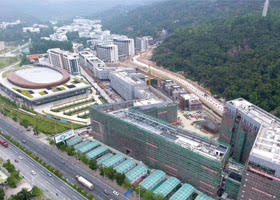
Guangdong Technion
Degrees of Technion
A year after the cornerstone ceremony of the Guangdong Technion Israel Institute of Technology, the fledgling multinational institute in China received official approval from the Chinese Ministry of Education. Cooperation with Technion is consistent with the goal of the Chinese Government to establish world-class research universities and to promote innovation-based development, confirmed the ministry. The new campus opens in the coming academic year..
TECHNION TAKES THE BRONZE AT THE CHEMISTRY OLYMPICS
Summer 2016 and Technion City opened its eyes to the stars, hosting the International Space University (ISU), the first ever in the Middle East.
Over 100 participants from 24 countries paraded their national flags, many wearing national costumes to initiate an academic festival of lectures, distinguished guests and space innovation.
Technion hosted the 29th annual Space Studies Program (SSP16) for an intense nine-week graduate level program which offers the participants a unique and comprehensive professional development experience covering all aspects of space programs and enterprises.
Guests included US astronauts Buzz Aldrin (second man on the moon), Jeff Hoffman, and Jessica Meir; Rona Ramon, (widow of Israeli astronaut Ilan Ramon); Canadian astronomer David Levy, who discovered Comet Shoemaker-Levy 9; and aerospace engineer and science-fiction writer Eric Choi.
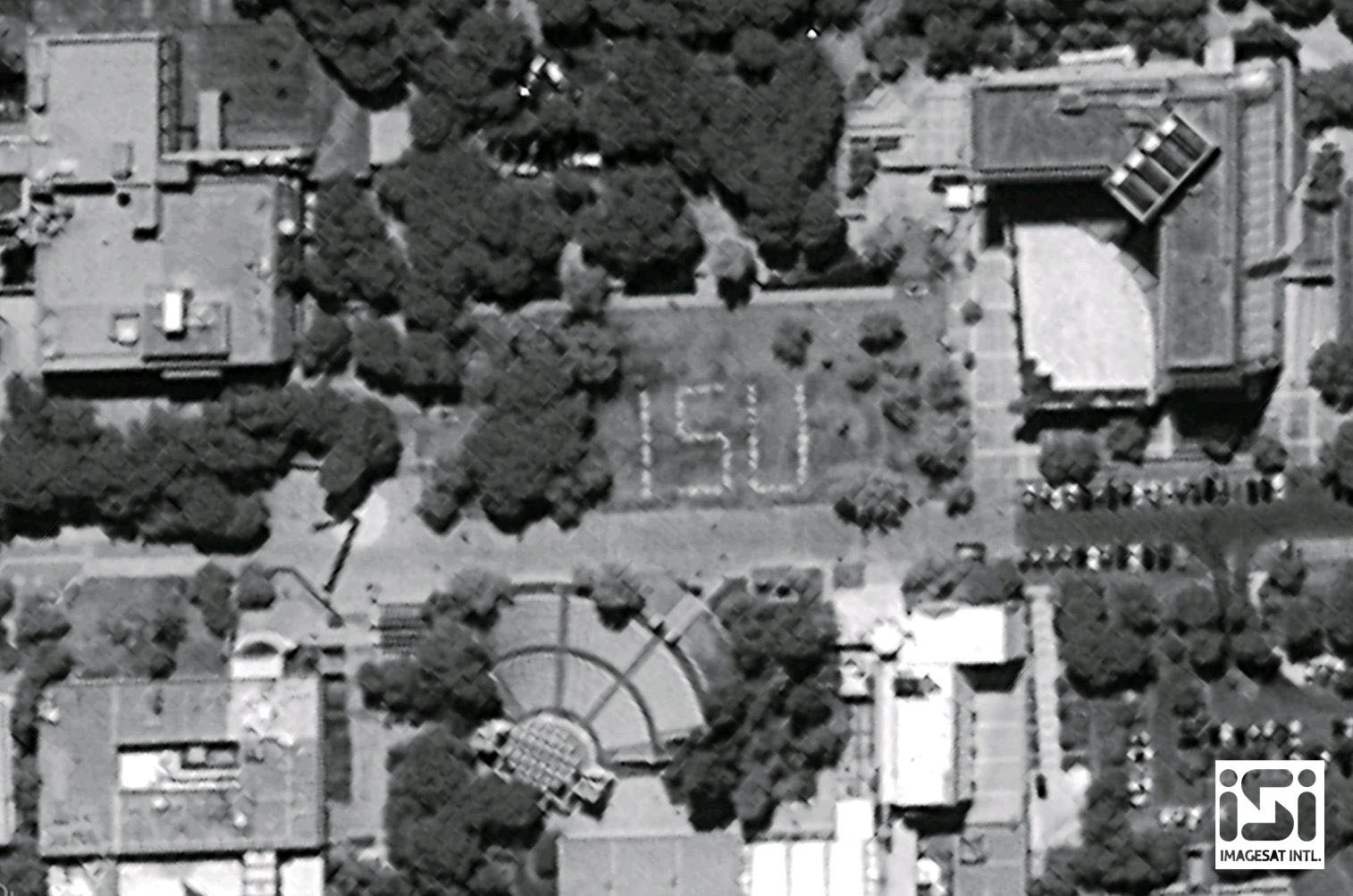
Events included a robotics competition, a rocket launch at Kibbutz Gal’ed, and the first SpaceUp Unconference in the Middle East. The energy charged summer even included a ‘Selfie’ of SSP participants at the heart of Technion campus, taken by satellite.
Earthlings formed the letters ISU on the great lawn at the heart of the campus for a selfie from space!
“Today, I consider myself a global spokesman for space.”
– Dr Buzz Aldrin, at Technion SSP

MOOC It Up
Often equated to the revolution sparked by Gutenberg’s printed word, the MOOC is providing worldwide access to the most advanced ideas fueling human progress.
“This is part of going global. All the best universities are there,” explains Ronit Lis-Hacohen, Managing Director of the Technion International School. A MOOC (Massive Open Online Course) is not a repetition of the traditional class given in the lecture hall, but a whole new form of education, she says. MOOCs have a dual impact – not only online, but also on traditional teaching methods. Increasingly, the online course brings focus and precision to course conceptualization, while students have the option of studying in and around their term-time activities.
“Educate the masses, elevate their standard of intelligence, and you will certainly have a successful nation.” – Alexander Graham Bell
There is even the possibility, demonstrated by Prof. Danny Levine, to flip the classroom: giving the MOOC as homework, and leaving the space of direct interaction with students in person for problem-solving, discussion and in-depth exploration of the subject matter. “It works perfectly and the average grade rises,” says Lis-Hachohen.
One of the exciting MOOCs that was recently launched by Technion is given by Prof. Michael Elad on Sparse Representation Theory (Sparseland), the first session presents basic theoretical ideas of sparse representations, and the second connects this model to applications in image processing.
Prof. Elad of the Computer Science Faculty, has made sharp inroads into the emerging field of Deep Learning together with his dynamic graduate team. Last year they introduced unprecedented theoretical foundations to the field of Deep Learning, explaining many of the important aspects of multi-layered neural networks.


Digital 1st
“The one who cares for the future, plants wheat. The one who cares for the years to come, plants trees. The one who cares for future generations, educates people.” – Janusz Korczak
From medicine to banking, through to agriculture and communications, the digital revolution is transforming all fields of life. Just as academic institutions worldwide wake up to the fact that the education of students with the latest digital skills is a direct function of success, Technion has been named by a Times Higher Education survey as the top institute worldwide in inculcating digital skil
“This is a badge of honor for Technion,” says Technion President Prof. Peretz Lavie. “In recent years, Technion has placed considerable emphasis on training its students to meet the changing needs of the digital revolution. Advanced learning technologies are being implemented, including the introduction of MOOCs –MOOCs – Massive Open Online Courses – in various languages – and the development of the flipped classroom approach, which emphasizes self-study using state-of-the-art technology.”

In the recent Times Higher Education survey, representatives of global leading companies were questioned on required skills to succeed in today’s labor market. The survey compiled a list of top academic institutions for providing the best digital skills, ranking Technion first.

Jacobs Technion-Cornell
Technion and Cornell University honored the 2017 graduates of the Joan & Irwin Jacobs Technion-Cornell Institute at Cornell Tech – including the first-ever graduating class of Health Tech students and the second graduating class of Connective Media students. This will be the last class graduating from Cornell Tech’s temporary home in the Google building in Chelsea as the new Cornell Tech campus home of the Jacobs Technion-Cornell Institute opens on Roosevelt Island in September.
IMPROVED SWIMMING FOR NANO-SCALE ROBOTS
Summer 2016 and Technion City opened its eyes to the stars, hosting the International Space University (ISU), the first ever in the Middle East.
Over 100 participants from 24 countries paraded their national flags, many wearing national costumes to initiate an academic festival of lectures, distinguished guests and space innovation.
Technion hosted the 29th annual Space Studies Program (SSP16) for an intense nine-week graduate level program which offers the participants a unique and comprehensive professional development experience covering all aspects of space programs and enterprises.
Guests included US astronauts Buzz Aldrin (second man on the moon), Jeff Hoffman, and Jessica Meir; Rona Ramon, (widow of Israeli astronaut Ilan Ramon); Canadian astronomer David Levy, who discovered Comet Shoemaker-Levy 9; and aerospace engineer and science-fiction writer Eric Choi.
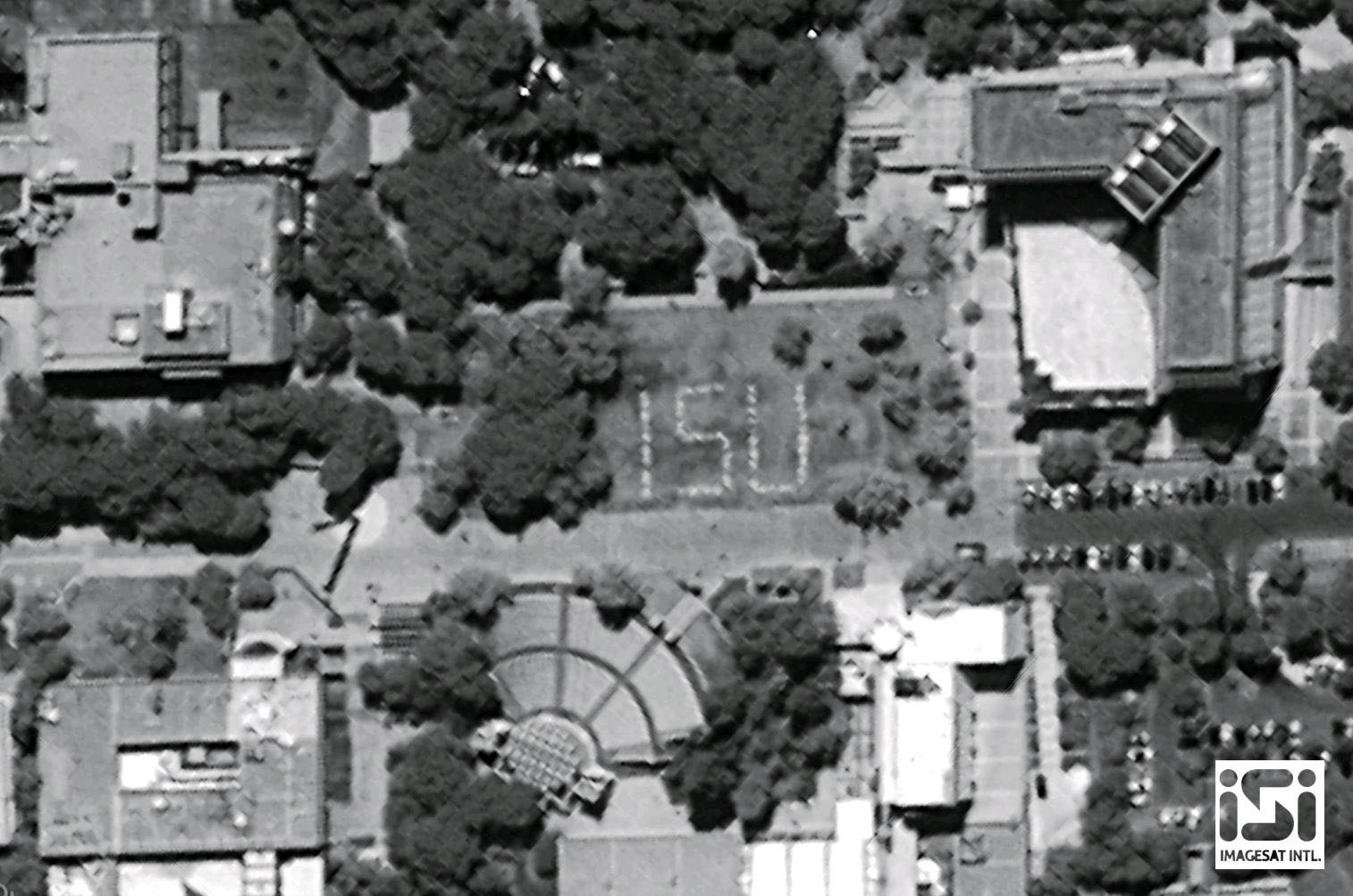
Events included a robotics competition, a rocket launch at Kibbutz Gal’ed, and the first SpaceUp Unconference in the Middle East. The energy charged summer even included a ‘Selfie’ of SSP participants at the heart of Technion campus, taken by satellite.
Earthlings formed the letters ISU on the great lawn at the heart of the campus for a selfie from space!
“Today, I consider myself a global spokesman for space.”
– Dr Buzz Aldrin, at Technion SSP
TECHNION MEDAL
The Technion Medal is awarded in recognition of exceptional individuals who have made unstinting efforts to advance humanity; who have worked tirelessly to contribute to the welfare of the Jewish people and the State of Israel; and whose diligent and generous support has proved critical in advancing the Technion, thereby strengthening the industrial, scientific and economic infrastructure of Israel. First established in 1996, the Medal is the Technion’s highest honor representing the utmost level of recognition that the Technion can bestow.

Honorary Doctors
A
Sir Patrick Abercrombie, 1953
Prof. Anatole de Abragam, 1986
Joseph Ackerman, 2009
Frederick R. Adler, 1998
Prof. Yakir Aharonov, 1992
Prof. Michael Aizenman, 2018
Elie Alalouf, 2010
Yoram Alster, 2013
Prof. Bernard Amadei, 2017
Walter H. Annenberg, 1991
Efraim R. Arazi, 1985
MK Moshe Arens, 1986
Ing. Paul S. Arieli (Goldschmidt), 2003
Ted Arison, 1998
Prof. Alain Aspect, 2011
David J. Azrieli, 1985
B
Justice Aharon Barak, 1998
Alfred J. Bär, 2013
Zahava Bar-Nir, 2009
Prof. The Honourable Dame Marie Bashir AD CVO, 2016
Norman Belmonte, 2005
David Ben Gurion, 1962
Louis Benjamin, 1993
Miriam Benjamin, 1991
Gen. (Res.) Avihu
Ben-Nun, 2006
Evelyn Berger, 2006
Prof. E. D. Bergman, 1955
Angelica Berrie, 2008
Prof. Sir Michael V. Berry, 2006
Dr A. Biram, 1965
Ilan Biran, 2013
Prof. Joan S. Lyttle Birman, 1995
Dr Joel Birnbaum, 1999
Prof. R. Byron Bird, 1993
Scott Black, 2007
Simha Blass, 1958
Arthur Blok, 1972
Melvyn H. Bloom, 2013
Michael R. Bloomberg, 2016
Bernard M. Bloomfield, 1978
Neri J. Bloomfield, 1990
Erik Blumenfeld, 1992
Prof. David Bohm, 1992
Dr Niels Bohr, 1958
Dr Zeev Bonen, 2004
Dr Carl de Boor, 2002
Prof. Haim Brezis, 1998
Dr. Andrei Zary Broder, 2014
Frances Brody, 2002
Lucien Bronicki, 2007
Yehudit Bronicki, 2007
Prof. Bernard Budiansky, 1995
Marshall Butler, 2001
C
Dr Santiago Calatrava, 2004
Prof. Alberto P. Calderon, 1989
Arie Carasso, 1988
Prof. Srulek Cederbaum, 2012
Prof. Malcolm Chaikin, 1991
Stanley Chais, 2008
Prof. Herman Chernoff, 1984
Prof. Alexandre Joel Chorin, 2003
Winston S. Churchill, 1997
Dr Lillian Chutick, 1997
Dr. Joseph Ciechanover, 2017
Prof. Jacob Willem Cohen, 1988
Prof. Morris Cohen, 1979
Sydney C. Cooper, 1992
Elizabeth Corob, 1993
Sidney Corob, 1986
Prof. Frank A. Cotton, 1983
Edith Cresson, 2011
Lester Crown, 1996
D
P. F. Danel, 1952
Dr George B. Dantzig, 1973
Robert A. Davidow, 2007
Dr Duncan Davies, 1982
Dr Igor Dawid, 2009
Prof. Arnold L. Demain, 2000
Prof. Alan M. Dershowitz, 2014
Bern Dibner, 1976
Prof. François Diederich, 2012
Prof. David L. Donoho, 2017
Gen. Yaakov Dori, 1967
Prof. Israel Dostrovsky, 1994
Max Dresher, 1991
Prof. Mildred S. Dresselhaus, 1994
Prof. Daniel Drucker, 1983
Prof. Jack D. Dunitz, 1990
E
Prof. Beno Eckmann, 1983
Dr Albert Einstein, 1953
Prof. Odile Eisenstein, 2017
Col. Jehiel R. Elyachar, 1979
J. Steven Emerson, 2013
Dr Joseph N. Epel, 1994
Dr Moshe Epstein, 2011
Prof. Paul Erdos, 1983
F
Yekutiel Federmann, 1989
Israel Feldman, 2003
Harry F. Fischbach, 1971
Edith Fischer, 2005
Max M. Fisher, 1991
Dr F. Julius Fohs, 1957
Dr William Fondiller, 1949
R. J. Forbes, 1953
Prof. Stephen R. Forrest, 2018
Alan Forman, 2011
Dr J. Franck, 1953
Reinhard Frank, 2009
Thomas L. Friedman, 2008
Dr Dov Frohman, 1995
Prof. Gilbert F. Froment, 1984
G
Uzia Galil, 1977
Dr Jacob M. Geist, 1987
Mark Gelfand, 2011
Raya Gensler, 2002
Emmanuel Gill, 1994
Arthur Gilbert, 1999
Benno Gitter, 1991
Prof. Israel Gohberg, 2008
Alexander Goldberg, 1975
Edward R. Goldberg, 1990
Dr Emanuel Goldberg, 1957
Gary Goldberg, 2012
Joan Goldberg Arbuse, 1987
Prof. Jose Goldemberg, 1991
Prof. Andrew and Aviva Goldenberg, 2018
Prof. Richard Goldstein, 1994
Dr Sydney Goldstein, 1969
Prof. Solomon W. Golomb, 2011
Prof. Graham C. Goodwin, 2006
Dr Bernard Gordon, 2005
Stephen Grand, 2010
Doreen Brown Green, 2014
Joseph Gruss, 1989
Joseph Gurwin, 2004
H
Prof. Peter Haasen, 1993
Homer Harvey, 1989
Dr George H. Heilmeier, 1997
Michael Heller,2010
President Chaim Herzog, 1987
Sandy Hittman, 2015
Dr Christian Hodler, 1998
Dr Nicholas J. Hoff, 1980
Dr Alan Hoffman, 1986
Prof. Roald Hoffmann, 1996
Prof. Robert Hofstadter, 1985
Gen. (Res.) Amos Horev, 1984
Dr F. Houphouet-Biogny, 1962
Eli Hurwitz, 1990
I
Isin Ivanier, 1981
Gen. (Res.) David Ivry, 1996
J
Lawrence S. Jackier, 2004
Dr Irwin M. Jacobs, 2000
Ludwig Jesselson, 1988
HE David Johnston, 2016
HE David Johnston, 2016
Prof. Joshua Jortner, 2005
Prof. Michel Jouvet, 1991
K
D. Dan Kahn, 2011
Prof. Thomas Kailath, 2011
Dean Kamen, 2015
Sanford Kaplan, 1995
Dr Shlomo Kaplansky, 1950
Dani Karavan, 2009
Prof. Marcus Karel, 1991
Prof. Samuel Karlin, 1985
Prof. Theodore von
Karman, 1951
Prof. Richard M. Karp, 1989
Prof. Alfred Kastler, 1983
Prof. Ephraim Katzir, 1983
Martin Kellner, 1985
Michael Kennedy Leigh, 1983
Moshe Keret, 2000
Dr Laurence R. Klein, 1982
Philip E. Klein, 2004
Prof. Leonard Kleinrock, 2010
Prof. Sir Aaron Klug, F.R.S., 1989
Teddy Kollek, 1994
Prof. Karl Ludwig Kompa, 1995
Sidney Konigsberg, 2002
Yaacov Kotlicki, 2011
Theodore H. Krengel, 2001
L
Frank R. Lautenberg, 1984
Benny Landa, 2004
Justice Moshe Landau, 1980
Prof. Rolf W. Landauer, 1991
Prof. Robert S. Langer, 1997
Dr Stephen A. Laser, 2009
David Laskov, 1975
Dov Lautman, 1995
Dr. Jean-Yves Le Gall, 2018
Prof. Jean Marie Lehn, 2009
François Leotard, 1992
Dr Richard A. Lerner, 2001
William Lester, 1999
Gustave Leven, 1991
Hubert Leven, 2005
Prof. Michael Levitt, 2015
Prof. Jacques Lewiner, 2016
Emanuel Zvi Liban, 2017
Israel Libertovsky, 1987
Arch. Daniel Libeskind, 2008
Eric Lidow, 1984
Prof. Anders Lindquist, 2010
Robert Lirmit, 1960
Sir Ben Lockspeiser, 1952
Lorry I. Lokey, 2007
Dr Walter C. Lowdermilk, 1952
Prof. Robert E. Lucas, Jr., 1996
M
Prof. Thomas L. Magnanti, 2007
Alexandre Mallat, 2002
Alfred E. Mann, 2005
Galia Maor, 2010
Harold Marcus, 2012
Prof. Rudolph A. Marcus, 1998
Dr Herman F. Mark, 1975
Prof. Krzysztof Matyjaszewski, 2015
Dr Dan Maydan, 2001
Raphael Mehoudar, 2014
Zubin Mehta, 2013
Etia Meilichson, 1997
Prof. Angelo Miele, 1992
Dr Hyman Mitchner, 2010
Gen (Res) Amram Mitzna, 2010
Dr A. I. (Ed) Mlavsky, 1994
Dov Moran, 2016
Martin Paul Moshal, 2017
Prof. Klaus A. Müllen, 2018
Prof. Benno Müller-Hill, 2000
Peter Munk, 2001
Dr J. Fraser Mustard, 1995
N
Avinoam Naor (Aharonovich), 2008
Ruth Leventhal Nathanson, 2010
Samuel Neaman, 1982
Dr Yuval Ne’eman, 1966
Shlomo Nehama, 2006
Robert Neter, 1999
Joseph Neubauer, 2017
Dr Caroll V. Newsom, 1958
Itzhak Nissan, 2012
M. Novomeysky, 1957
O
Harry Oppenheimer, 1989
Dr Eli Opper, 2012
Prof. Simon Ostrach, 1986
P
Prof. Amnon Pazy, 2006
Lois Peltz, 2006
Dr Arno A. Penzias, 1986
Shimon Peres MK, 1985
Prof. Lev Pitaevskii, 2010
David Polak, 2009
Israel Pollack, 1993
Rachel Pollak, 2005
Manes Pratt, 1968
Dan Propper, 1999
R
Dr I. I. Rabi, 1963
Yitzhak Rabin MK, 1990
Prof. Seymour Rabinowitz, 1991
Bruce Rappaport, 1979
Ruth Rappaport, 2014
Dr Johannes Rau, 2000
Leon Y. Recanati, 1999
Arnold Recht, 1999
Prof. L. Rafael Reif, 2017
Prof. James R. Rice, 2005
Hershel Rich, 1998
Dr L. A. Richards, 1952
Louis B. Rogow, 1988
Barrie Rose, 2000
Daniel Rose, 2013
David Rose, 1961
Edward E. Rosen, 1966
Maurice M. Rosen, 1978
Prof. Azriel Rosenfeld, 2004
Prof. Alvin E. Roth, 2013
Joel S. Rothman, 2015
Baroness Ariane de Rothschild, 2018
Sir Evelyn de Rothschild, 1982
Lord Rothschild, 1968
S
Rabbi Lord Jonathan Sacks, 2018
Dr Henry Samueli, 2005
George Sarton, 1953
Ed Satell, 2016
Prof. Harold A. Scheraga, 1993
Dr M. Schiffer, 1972
Maximilian Schlomiuk, 1989
Michael Schor, 1985
Seymour Schulich, 2007
Prof. Helmut Schwarz, 2000
Al Schwimmer, 1968
Joan Seidel, 2012
Norman Seiden, 1986
J. R. Sensibar, 1963
Dr Donna Shalala, 1994
Prof. Rachel Shalon, 1988
Prof. Ascher H. Shapiro, 1985
Max Shein, 1993
Irving A. Shepard, 2001
Dr Bernard Sherman, 2004
Leonard H. Sherman, 1994
Dr. Robert J. Shillman, 2018
Stanley Shirvan, 2006
Avraham B. Shochat, 2002
George P. Shultz, 1992
Gil Shwed, 2004
Ramie Silbert, 1996
Julius Silver, 1971
Prof. Barry Simon, 1999
Dr David J. Skorton, 2016
Haim Slavin, 1958
Prof. Richard E. Smalley, 2004
Prof. Louis D. Smullin, 1986
Dr Solomon H. Snyder, 2002
Michael Sobol, 1980
Jonathan Sohnis, 2008
Ben Sosewitz, 1999
Prof. Jason L. Speyer, 2013
Dr Philip Sporn, 1960
Prof. Günter Spur, 2012
Prof. Peter J. Stang, 2014
Eugene Stearns, 1986
Harry J. Stern, 2000
Prof. Eli Sternberg, 1984
Ing. Isaac (Eddie) Streifler
Shavit, 2003
Prof. Werner Stumm, 1989
Prof. Nam Pyo Suh, 2007
Dr Avraham Suhami, 1981
Albert Sweet, 2014
Gerard Swope, 1957
Joseph Szydlowski, 1984
T
Joseph Tanenbaum, 2007
Henry Taub, 1983
Marilyn Taub, 2014
Prof. Karl Taylor Compton, 1954
PM Margaret Thatcher, 1989
Prof. Edwin L. (Ned) Thomas, 2016
Dr Lester C. Thurow, 2001
Laurence A. Tisch, 1989
Gen. Dan Tolkowsky, 1982
Sam B. Topf, 1992
Prof. Barry M. Trost, 1997
Abraham Tulin, 1957
U
Jacob W. Ullmann, 1980
Dr Harold C. Urey, 1962
Prof. Heinrich Peter Klaus
Ursprung, 1996
V
Dr Yossi Vardi, 2009
Dr Andrew J. Viterbi, 2000
W
Dr Selman A. Waksman, 1966
Eyal Waldman, 2016
Prof. Arieh Warshel, 2015
Sanford I. Weill, 2015
Prof. Felix J. Weinberg, 1990
Aharon Weiner, 1971
Prof. Victor F. Weisskopf, 1989
Prof. Charles Weissmann, 2015
Dr Chaim Weizmann, 1952
Eitan Wertheimer , 2011
Stef Wertheimer, 1992
Lewis Weston, 1996
Prof. Elie Wiesel, 2005
Dr Eugene Paul Wigner, 1971
Dr Shmuel Winograd, 1992
Ben Winters, 1993
Dr J. Wolfowitz, 1972
Lord Leonard Wolfson, 1995
Prof. Chi-Huey Wong, 2007
Dr Robert B. Woodward, 1966
J. W. Wunsch, 1955
Y
Prof. Rosalyn Sussman Yalow, 1989
Moshe Yanai, 2012
Elisha Yanay, 2013
Z
Dr Felix Zandman, 1997
Prof. Bruno Zevi, 1990
Stanley Zielony, 2003
Zvi Zilker, 2000
Yehuda Zisapel, 2001
Zohar Zisapel, 2001
