From Annapurna to Amazon

How two Technion alumni conceived the start-up that would help Amazon move swiftly and smartly into the next generation of digital enterprise.

In 1992, Billy Hrvoye left war-torn Sarajevo on the last Jewish Agency flight to Israel. With his life on-hold, the young refugee convinced the dean of the Technion Faculty of Electrical Engineering to let him resume his studies despite the language barrier. “The Technion was my family and my first home,” he says. “I came like a refugee and the Technion helped me dream big.”

While at Technion, Billy befriended fellow student Nafea Bshara, a Christian Arab from the northern town of Tarshiha, who, because his father was a Technion student, was born into a Technion dorm. Impressions of infancy ran deep, as Nafea ended up enrolled within the Technion Excellence Program. “I don’t think I would get the fundamentals and breadth and exposure that I received  at Technion at an Ivy League school,” he says.

“Our cultural DNAs matched. We both wanted to change the world.”– Nafea Bshara
“Our mantra is that there are limitless opportunities.” – Billy Hrvoye

After working at IBM and the Israeli StartUp Galileo, the two Technion alumni decided to start up alone. “We co-founded Annapurna with Ronen Boneh and a group of exceptionally talented leaders,” recalls Billy. The product  accelerates cloud servers – claiming superior performance, security and efficiency. “Many companies weren’t willing to take risks, but Amazon is forward-thinking with a long-term vision,” explains Nafea. “Our cultural DNAs matched. We both wanted to change the world.”

Soon Annapurna had 70 people doing R&D in Yokneam and 19 more around the world in sales and marketing. In early 2015, Amazon bought Annapurna Labs reportedly for over $300 million. After the acquisition, Amazon announced the opening of two new centers in Tel Aviv and Haifa, which will provide work for hundreds of Israelis.

“Our biggest problem is deciding what NOT to do,” says Billy: “On a human level, it’s important that the people with us fulfill their dreams. We believe that if you can dream it, you can do it.”


Technion Mechanical Engineering

Education Without Borders

The Lalibela group of the Technion Chapter of Engineers Without Borders took part in a mud construction workshop in the Ramon Eco Center in Mitzpe Ramon, during which they built and tested different models of rocket stoves. The Lalibela group is working on developing a new type of a sustainable stove for the Meskele Kristos community in Ethiopia, which will significantly reduce the pollution emitted by the traditional stoves and thereby improve the health of the community members.

Education without borders    

Education without borders student


Engineers without borders Technion

The Internet of Value

Why the world’s new currencies will be encrypted

The digital revolution has left no stone unturned, but perhaps one of the most unexpected revolutions currently in motion is impacting the financial sector with the arrival of the bitcoin and other decentralized electronic currencies.


Bitcoin and Etherium  

In September 2017, the The Hiroshi Fujiwara Cyber Security Research Center at Technion hosted the conference: “Decentralized Cryptographic Currencies and Blockchains.” The conference featured some of the elusive movers and shakers in the field of Crypto currencies – including Vitalik Buterin, founder of Ethereum, an open-source platform based on blockchains. Ethereum skyrocketed in 2017, reaching an all-time high.


“The first generation of the digital revolution brought us the Internet of information. The second generation — powered by blockchain technology — is bringing us the Internet of value: a new platform to reshape the world of business and transform the old order of human affairs for the better.”– Don Tapscott, Blockchain expert

The conference also addressed blockchains, the technological concept behind cryptocurrencies such as Bitcoin, Ethereum, and Zcash; the regulation of virtual currencies; and more. It was attended by students, researchers, and industry professionals.

Prof. Eli Ben-Sasson (L) with conference participants, presidents report 2018
Prof. Eli Ben-Sasson (L) with conference participants

The conference was organized by Prof. Eli Biham, head of the Fujiwara Cyber Security Research Center, and Prof. Eli Ben-Sasson, both from the Faculty of Computer Science.

The Hiroshi Fujiwara Cyber Security Research Center at Technion focuses on cyber security research such as software and hardware protection, operating systems and cloud information protection as well as communication to and from the cloud, protection of IoT (Internet of Things) systems, verification of software and hardware, computer vision, security of autonomous systems, machine learning for security, cryptology and  cryptanalysis, security and privacy of medical and aeronautical systems.


The Power Behind Power

Innovation aside, the whole entity of civilization depends on energy. Where energy supplies deplete, nations implode, wars explode and suffering corrodes. With a finite supply of fossil fuels and an exponential increase in demand for energy, the Grand Technion Energy Program (GTEP) is presently completing a decade of intense multidisciplinary activity. In these ten years, GTEP has grown from proof of concept to a veritable virtual and physical global hive of energy innovation. Spanning faculties, universities and continents, GTEP’s network of scientists and facilities also has deep inroads into industry, pioneering, for example, the cultivation of expertise to harvest Israel’s newly found natural gas reserves.

Prof. Maytal Caspary Toroker, President's report 2018
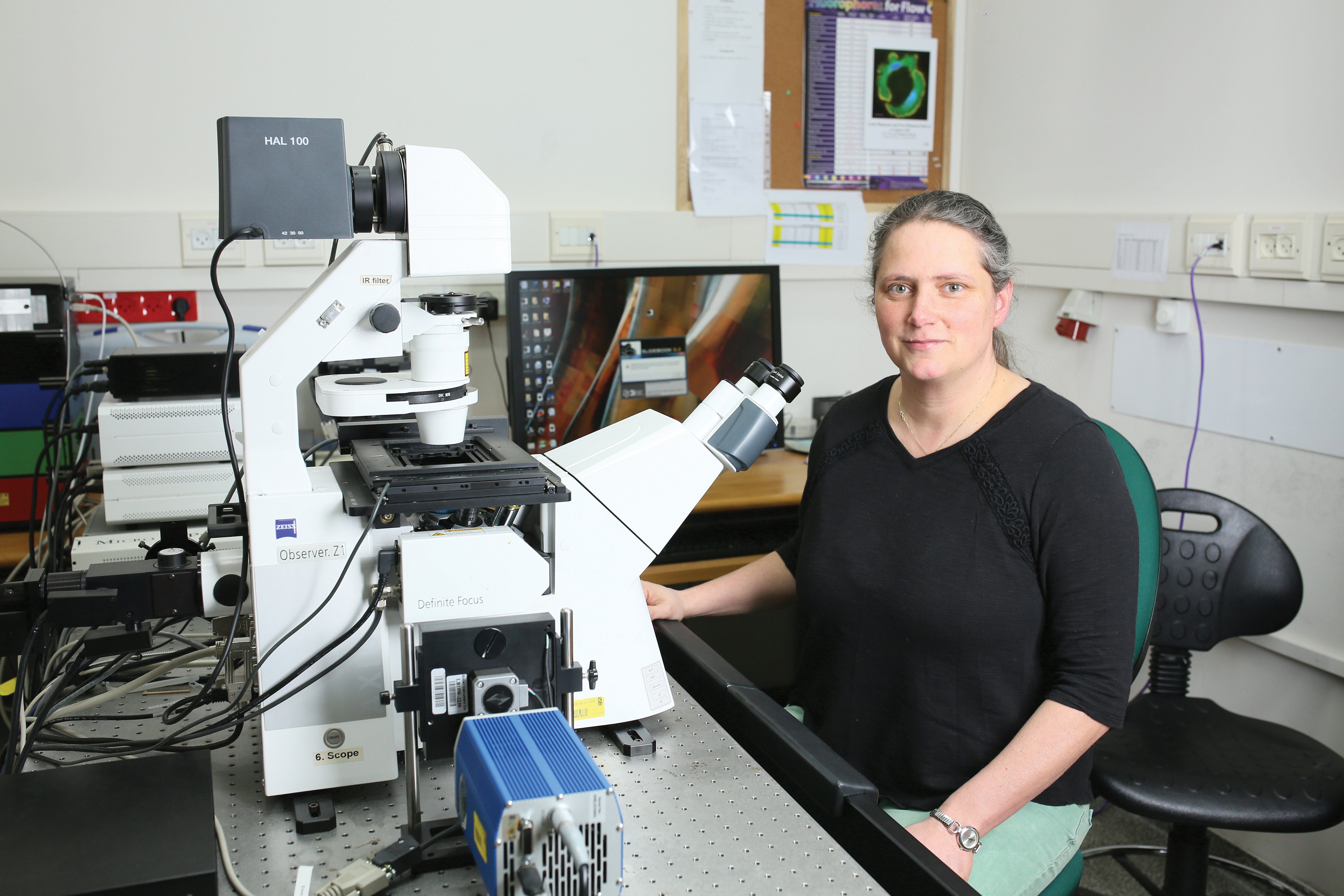
Prof. Maytal Caspary Toroker: just one of the GTEP energy pioneers. Her research group deciphers the success of doping iron as the best catalyst known today for splitting water. Water splitting is a process in which water is broken down into hydrogen and oxygen.

The GTEP Graduate Studies Program attracts highly motivated graduates in science and engineering who are also required to carry out a research project. The program is designed to produce leaders in all energy-related fields.

GTEP is active in four dimensions: Alternative Fuels, Energy Storage and Conversion, Renewable Energy Sources, and Energy Conservation.

Nitzan Zohar lab, President's report 2018


Natural Genius

How mimetics at the nano scale are improving man made materials

We’re all familiar with the Biblical saying: “There’s nothing new under the sun.” The study of the ancient mechanisms of the brittle starfish led Technion scientists to the innovative secrets which would allow them to follow suit – creating ultra-tough ceramics.

An international research team led by Prof. Boaz Pokroy, Dr. Iryna Polishchuk, Dr. Alex Katsman Stas Kozachevich, and Yael Etinger-Geller at the Faculty of Materials Science and Engineering uncovered the unique protective mechanism of highly resistant lenses found in the Ophiocoma wendtii, a coral reef-dwelling brittle starfish. On the arms of this creature are hundreds of focal lenses that hold clues to making tough ceramics. Made of chalk, the lenses are powerful and accurate, and the deciphering of their crystalline and nanoscale structure has occupied lead researcher Prof. Boaz Pokroy and his team for over three years.

“Ophiocoma wendtii lenses are created in the open sea, not in a laboratory, and in effect we have discovered a strategy for making brittle material much more tough and durable under natural conditions,” said Pokroy. “It is ‘crystal engineering’ and tempering without heating and quenching – a process that could be very useful in materials science and engineering. Just as nature exhibits creativity in improving an organism’s abilities in various contexts such as strength, sensing, and self-defense, we see very high efficiency by the brittle star’s use of existing raw materials under natural conditions to create hardy and precise transparent lenses,” said Prof. Pokroy.

Scientists and engineers can now apply this biostrategy in toughening and strengthening synthetic ceramic materials utilized in various applications that span from optical lenses to automotive turbochargers and even biomaterial implants. The research was published in Science in December 2017.

Out of Chaos

At the purest frontiers of science and operating on a nanometric scale‭, ‬a research team led by Prof‭. ‬Erez Hasman at the Faculty‭ ‬of Mechanical Engineering has created a photonic‭ ‬“Big Bang”‭ ‬in laboratory conditions‭.‬

The multidisciplinary team demonstrated the transition from an orderly physical system to a disorderly system in optics on a nano-scale. The nanooptics Big Bang occurs when there is increased disorder and the system reaches a critical point of disorder, meaning dispersal of the opposite spinning photons in every direction. “Our research deals with the development of nanometer scale optical devices and with understanding the interaction between light and tiny structures,” explains Prof. Hasman, head of the nano-optics lab.

The photonic “Big Bang” used nanometric metasurfaces based on tiny silicone antennas (nano-antennas). “Using nano-antennas that we produced in the lab using silicone technology, we developed a method to control disorder in the system – increasing the entropy,” elaborates Prof. Hasman. “Light is composed of photons, massless particles, travelling in a speed of light. Each photon behaves like a spinning top that spins either clockwise or counter-clockwise.”

A “photonic spin Hall effect” occurs when an orderly state is transformed into a state of minor disorder, meaning that the angle of the nano-antennas is slightly altered. This effect is a spatial separation between photons spinning in opposite directions; photons with positive spins move in a certain direction and others with negative spins move in the opposite direction.

The research, published in Science, provides inspiration for understanding disorder in solid states, and will impact the field of spintronics. Furthermore, it opens opportunities for designing artificial materials while controlling their level of disorder.


Predicting Health


For two days in December, researchers and students converged on Technion to hear from the world’s foremost experts on one of the most dynamic and groundbreaking fields today: using deep learning and big data to improve healthcare.

Technion recently hosted the first ever “Biomedical Informatics – Big Data Science” Conference, drawing a large audience eager to hear about the latest developments in this fascinating field. Applying deep learning to medical data makes it possible to generate new hypotheses and to make discoveries that would not have been possible in the past. The conference was brilliantly organized by Prof. Roy Kishony, world authority on antibiotic resistance and Head of the Technion Lokey Center for Life Sciences and Engineering and Dr. Kira Radinsky, visiting Technion professor and director of data science of eBay. Their unique synergy resulted in a precise mix of speakers who covered a wide range of topics – from practical applications of data science in medical care to ethical precision medicine and next generation healthcare. In the course of two days, 24 eminent speakers from around the world shared their latest research findings with the international audience. The conference was sponsored by Yad Hanadiv.

Predicting health conference, President's report 2018
Conference Lecturers


We’re living in a fascinating era for scientific research, an era where extensive data is used to improve diagnoses and treatments”   
– 
President Prof. Peretz Lavie

Prof. Shai Shen-Orr, of the Rappaport Faculty of Medicine and the conference organizing team, addressed the ongoing efforts to build a cell-centered view of genomic data that can be integrated with primary immunology literature.

Dr. Kira Radinsky president's report 2018
Dr. Kira Radinsky

Experts from around the world included Prof. Nigam Shah from Stanford University, who described the initiative he leads, which takes data from electronic health records and uses machine learning to help doctors answer clinical questions. Dr. Hannah Bayer, a neuroscientist from New York University, spoke about the HUMAN Project, which studies 10,000 New York City residents over a period of 20 years, tracking everything from financial and social data to environmental and health factors.


Lockey center presidents report 2018            

Science shrinks the world

Does evolution depend on competition or collaboration? The discovery of antibiotics saved millions of lives, yet presently world health is in avicious spiral in which bacteria rapidly evolve to defeat available classes of antibiotics. Recruiting resources and knowhow from across the globe, Prof. Roy Kishony and colleagues are returning to the genius of nature to create superdrugs for superbugs.

In a creative stroke inspired by the digital billboard for the Hollywood movie, Contagion, Kishony and his team at Technion and Harvard Medical School opened a global window to observe how bacteria evolve as they become impervious to drugs. Described in the September issue of Science, the large-scale experimental tool offered a first glimpse at bacteria adapting to increasingly higher doses of antibiotics, visible to the naked eye.

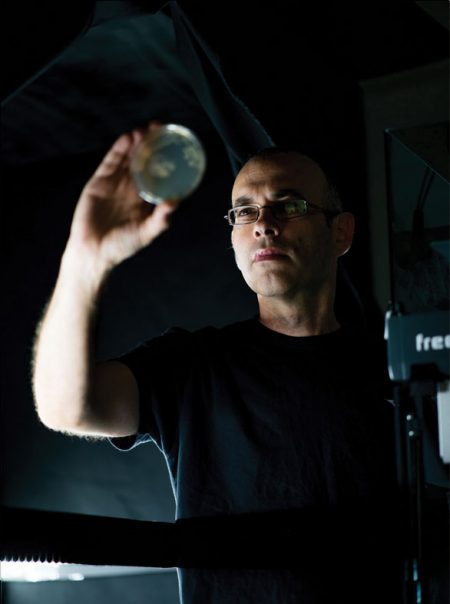
A two-by-four foot petri dish was filled with 14 liters of agar, a seaweed-derived jelly-like substance commonly used in labs to nourish organisms as they grow. The dish was divided into sections saturated with incremental doses of antibiotics. Over the course of two weeks, a camera mounted on the ceiling above the dish took periodic snapshots. The result was a direct and detailed observation of bacterial movement, death and survival: evolution at work. The headline-grabbing Microbial Evolution and Growth Arena, was called the MEGA Plate for short. The video produced by the Kishony lab was viewed over 24 million times, likely making it the most viewed scientific experiment video of all times.

According to Kishony, “Seeing bacteria spread for the first time was a thrill. Our MEGA-plate takes complex and often obscure concepts in evolution, such as mutations-selection, lineages, parallel evolution and clonal interference, and provides a visual seeing-is-believing demonstration. It is also a powerful illustration of how easy it is for bacteria to become resistant to antibiotics.” Co-investigators Michael Baym and Tami Lieberman said the images spark the curiosity of lay and professional viewers alike.

Ultimately, in a dramatic demonstration of evolved drug resistance, bacteria spread to the highest drug concentration. In the span of 10 days, bacteria produced mutant strains capable of surviving a dose of the antibiotic trimethoprim 1,000 times higher than the one that killed their progenitors. When researchers used another antibiotic (ciprofloxacin) bacteria developed 100,000-fold resistance to the initial dose.

Kishony’s lab is collaborating with Israel’s health services and with the Faculty of Computer Science to collate big data in order to develop “predictive genome-based” diagnostics capable of foreseeing bacterial evolution and provide the best treatment at the individual patient level.

Roy Kishony is the Marilyn and Henry Taub Professor of Life Sciences and Head of the Lorry I. Lokey Interdisciplinary Center for Life Sciences and Engineering.


“We must learn from Technion and Israel as to what innovative thinking is”

BBiological pacemakers derived from stem cells could the cardiac revolution that makes electronic devices surgically inserted into the body a thing of the past.

When the heart needs support keeping rhythm, the life-saving solution today is the surgical implantation of an electrical pacemaker. While conventional pacemakers have saved many lives, they have always carried surgical risks and come with no hormonal sensitivity and a predetermined battery life. With children’s hearts that are still growing, the pacemaker implant becomes still more limited in its ability to support, as the heart rapidly outgrows it. What could be more natural than to turn to the wisdom of the body itself, and its own biological mechanism for maintaining the heart rhythm?”

The sinotrial (SA) node is the natural pacemaker of the heart, and is comprised of a group of dedicated heart cells – SA node pacemaker cells – responsible for initiation of the electrical signal leading to the heart’s rhythmic contraction.

The team from the Technion, Rambam Health Care Campus, and the University Health Network’s McEwen Centre for Regenerative Medicine in Toronto, employed developmental biology to develop a differentiation protocol for the creation of pacemaker cells from human embryonic stem cells.

“The pacemaker generated from embryonic stem cells exhibits the molecular, electrical and functional properties characteristic of human pacemaker cells and is able to pace the heart in animal models of abnormally slow heart rate,” said Prof. Gepstein. “It is an effective and promising alternative to natural pacemaker cells in the event of their dysfunction. This development is significant both in terms of research – because it will enable scientists to study the heart in new ways, and in practical terms – since we are presenting an ‘assembly line’ here for an unlimited reservoir of pacemaker cells to treat patients with heart rhythm problems.

Together with our Canadian partners, we present a method for producing a population of pure pacemaker cells, and provide proof that they work well as a substitute for natural pacemaker cells that have been damaged.”

Prof. Lior Gepstein holds the Sohnis Chair in Tissue Engineering and Regenerative Medicine.


The Iron Lady

Innovation begins with the blank page, at the space where knowledge ends and the unknown begins. It is found in the open mind of young scientists with fresh eyes that look at an old, unsolved problem in a new way.

So it was this year with Dr. Marianna Truman-Rosentsvit and Prof. Esther Meyron-Holtz who took the well-known medical problems around iron distribution in the body, and looked at them in a new way. Their discovery into the cellular mechanism of ferritin opens new possibilities for treatments for a range of diseases, including cancer and neurological disorders.

Esther Meyron Holtz,  Metabolic revelations Esther Meyron Holtz, Metabolic revelations


It is well known that we need iron in our body to stay healthy, but less known that too much iron can also cause trouble. Revealing the intelligence behind the distribution of iron, the scientists published a benchmark study in the January 2018 issue of Blood, that for the first time reveals the mechanism for cellular transport and secretion of ferritin, a protein considered central to iron storage in the body. The findings move ferritin to the center stage of systemic iron metabolism, as a protein that not only stores, but also transports iron in a controlled manner, giving it all the attributes of an iron regulator.The Iron Lady, Molecules

“Our discovery opens the door to a more accurate and comprehensive understanding of the characteristics of ferritin and the molecular processes it undergoes,” says Meyron-Holtz. “Such insights are bound to contribute to the development of therapies for numerous neurodegenerative diseases, which are characterized by abnormal iron distribution in the brain.”

 Metabolic revelations, President's repport 2018 Metabolic-revelations down the microscope          


The Future of Semiconductor Lasing

“What we did is going against the odds, going against common knowledge,” says Distinguished Prof. Mordechai (Moti) Segev of the Faculty of Physics. Prof. Segev was referring to the most recent papers, two groundbreaking back-to-back works on Photonic Topological Insulator Lasers published  in the prestigious journal Science. This work, says the trailblazing professor, is: “possibly the most important thing I ever did.” This is no small statement by the award-winning Robert J. Shillman Distinguished Professor of Physics.

Topological insulators are one of the most innovative and promising areas of physics in recent years, providing new insight into the basic understanding of protected transport. These are special materials that are insulators in their interior but conduct a “super-current” on their surface: the current on their surface is not affected by defects, sharp corners or disorder; it continues unidirectionally without being scattered.

The researchers found a way to use the properties of photonic topological insulators to build a new type of laser which shows a unique fundamental behavior and greatly improves the robustness and the performance of laser arrays, opening the door for a vast number of future applications.

Semi Conductor Lasing, The future of semiconductor lasing
(L-R): Dr. Miguel A. Bandres, Distinguished Prof. Mordechai Segev and Dr. Gal Harari

“Our research opens the door to many fundamental questions in science but also for exciting applications,” says graduate student Gal Harari. “One of these applications is a long standing problem in laser science and it is how to take many single emitters and coherently combine them together.”

“This new laser system went against all common knowledge about topological insulators” said Segev. “In a nutshell, the unique robustness properties of topological insulators were believed to fail when the system contains gain, as all lasers must have. But we have shown that this special robustness survives in laser systems that have a special (“topological”) design, and is able to make the lasers much more efficient, more coherent, and at the same time immune to all kinds of fabrication imperfections, defects and alike. This seems to be an exciting avenue to make arrays of miniature lasers work together as one: a single highly coherent high power laser.”

Topological Insulator Lasers

In their research, the scientists built a special array of micro ring resonators whose lasing mode exhibits topologically-protected transport – light propagates in one direction along the edges of the laser array, immune to defects and disorder and unaffected by the shape of the edges. This in turn, as they experimentally demonstrated, leads to highly efficient single-mode lasing that lasts high above the laser threshold.

The studies were conducted by Dist. Prof. Moti Segev and his team: Dr. Miguel A. Bandres and Dr. Gal Harari; in collaboration with Profs. Demetrios N. Christodoulides and Mercedeh Khajavikhan and their students Steffen Wittek, Midya Parto and Jinhan Ren at CREOL, College of Optics and Photonics, University of Central Florida, together with scientists from the US and Singapore.

The researchers demonstrated that not only are topological insulator lasers theoretically possible and experimentally feasible but that integrating these properties creates more highly efficient lasers. As such, the results of the study pave the way towards a novel class of active topological photonic devices that may be integrated with sensors, antennas and other photonic devices.


Helen Diller, President's report 2018

The Quantum Advantage

T he Helen Diller Center is the first of its kind in Israel and is uniquely poised to advance basic sciences while using the principles of quantum mechanics to impact various engineering fields, and to develop applications for a range of industries. Research will focus on quantum computing and information processing; quantum communications; quantum sensing and detection; quantum simulations; simulators and quantum materials. The Center will also be a quantum hub for interdisciplinary collaboration.

Helen Diller, President's report 2018
The late Helen Diller


“The Technion is one of the preeminent institutions for technology in the world, and my parents thought this was an important investment for the future of Israel and humanity,” said Helen Diller’s daughter, Jackie Safier, President of the Helen Diller Family Foundation. “The new Helen Diller Center for Quantum Science, Matter and Engineering will help Israel secure its place in the next revolution in science and engineering.”

“Over the years, Technion has gained renowned experience in identifying the needs of industries and opportunities for developing the Israeli economy,” said Technion President, Prof. Peretz Lavie. “In the past, this experience has been demonstrated in many fields, including space and aeronautics, microelectronics, electro-optics, and nanotechnology. This ability has allowed Technion to lead historic shifts in Israeli society and play a vital role in building Israel as the ‘Start-up Nation’ – a globally recognized technological powerhouse.”

“The Technion is at the forefront of research in many areas involving quantum mechanics,” said Distinguished Prof. Mordechai (Moti) Segev. “Artificial atoms ‘quantum dots’ were first demonstrated by Prof. David Gershoni and students. Gadi Eisenstein and his team developed tiny, inexpensive atomic clocks that found their way into industry. This is where innovative theoretical concepts were developed by Profs. Netanel Lindner, Daniel Podolsky, Assa Auerbach and their students in the area of quantum materials, with huge worldwide impact. These are only a few examples, out of very many, including some by my own team, such as our recent discovery of topological insulator lasers that started off as a quantum simulator system and evolved into devices with real potential impact on technology. The Helen Diller Family Foundation’s generous gift elevates the Technion to the pinnacle of quantum research institutions, and it is truly a game changer.”


Alan Alda Speak at Churchill Auditorium, President's report 2018

Science on Stage

“Every scientist has an interesting story. They just need to learn how to tell their story so that others will understand and remember.”– Alan Alda

Technion Nobel Laureate Distinguished Prof. Dan Shechtman once said: “I aspire to inspire before I expire.” There is no coincidence that the pioneer of a whole new form of matter, is also a pioneer in education, with a strong emphasis on the kind of education that leads to innovation. Inspiration has a direct link to excellence in both education and innovation, and at Technion in February 2018, Alan Alda inspired a packed Churchill Auditorium on the causal imperative of effective communication on matters of science and technology.

Captain Hawkeye Pierce
Alan Alda recalls as he reflects on the Chilean doctor who saved his life doing an operation he had done dozens of times on M*A*S*H

Best known as Captain Hawkeye Pierce from the hit 1970s television series M*A*S*H, the actor Alan Alda conducts seminars all over the US to help scientists improve the way they explain their work to other people. Many of the techniques Alda uses to teach communication, such as improvisational theater, are rooted in his acting career, and his talent as an actor was also clearly on display during his lecture. Alda, who is 82, had no problem holding the attention of the crowd in the large auditorium despite the lack of PowerPoint slides, proving that he is indeed a master of communication.

During the hour-long lecture, Alda compared interest in science to the three stages of falling in love (which he invented): attraction, infatuation and commitment. If scientists are able to connect to their listeners in such a way that they achieve commitment and an emotional bond, the listeners will remain engaged in the long-term. Since these are skills that everyone can learn, Alda believes that every scientist can be trained to effectively communicate even the most complex information to a lay public.

ALAN ALDA group focus May 2018 Nitzan Zohar, President's Report 2018
Alan Alda and Zuckerman fellows

Alda came to Israel along with a delegation from the Alan Alda Center for Communicating Science at Stony Brook University in order to teach science communication at Technion, in partnership with the Zuckerman STEM Leadership Program and the Kavli Foundation. Under the auspices of the Zuckerman Institute-Alda Center Scholars Project in Israel, Technion scholars participated in a two-day workshop led by Alda Center facilitators and researchers. A second two-day seminar, sponsored by Kavli, was open to Technion faculty members.


Zuckerman STEM logoAlan Alda Center For Communicating Science